
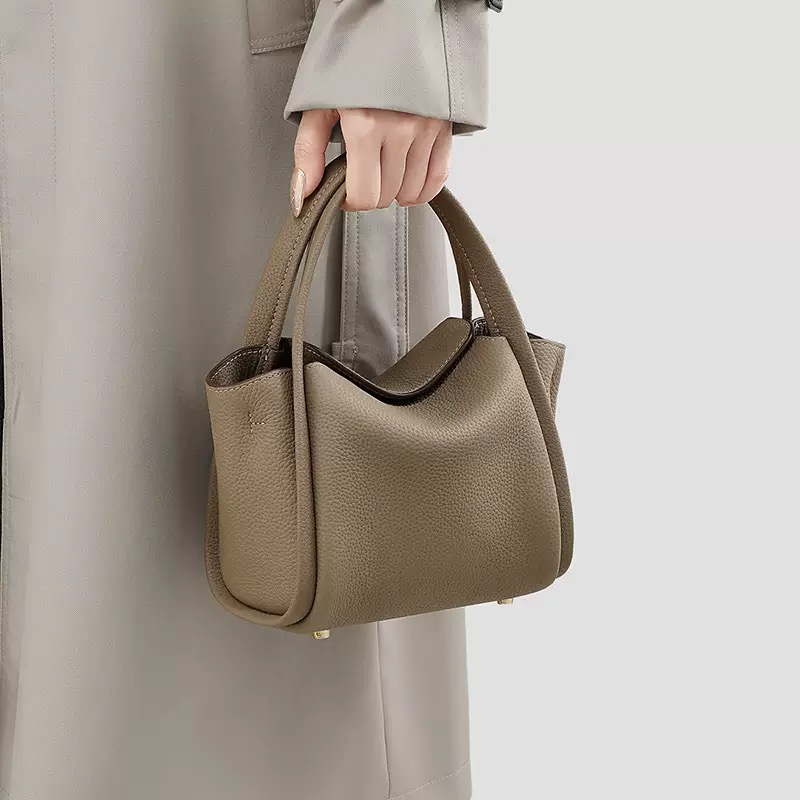
Choosing the best material for custom tote bags affects much more than appearance.
The fabric you select can influence durability, printing quality, bag structure, unit cost, shipping weight, and how customers perceive your brand. A lightweight promotional tote, for example, has very different material requirements from a premium retail bag designed for repeated use.
Cotton and canvas are popular choices for reusable branded totes. Non-woven polypropylene is often selected for cost-sensitive bulk promotions. Polyester and recycled polyester can work well for lightweight bags, while jute offers a natural textured appearance. Denim and nylon are useful for more specialized fashion, travel, and lifestyle applications.
This guide compares seven common tote bag materials by durability, printing compatibility, cost level, fabric weight, and ideal use so you can choose the right option before sampling or bulk production.
If you are developing a branded or private-label tote bag, you can also explore our custom tote bag manufacturing options.
What Is the Best Material for Custom Tote Bags?
There is no single best tote bag material for every project.
The right choice depends on four main factors:
- How the bag will be used
- Your target price
- Your logo or printing method
- The level of durability and structure you need
As a general guide:
| Your Requirement | Recommended Material |
| Premium retail tote | Canvas |
| Lightweight branded tote | Cotton |
| Budget bulk giveaway | Non-woven PP |
| Natural / rustic appearance | Jute |
| Lightweight or moisture-resistant application | Polyester / rPET |
| Fashion or lifestyle collection | Denim |
| Travel, sports or packable tote | Nylon |
For many brands, cotton and canvas are the starting point because they offer a good balance of appearance, printability, and versatility.
However, the final material should always be evaluated together with bag size, fabric weight, construction, logo method, order quantity, and target price.
Not Sure Which Tote Bag Material to Choose?
Tell us your target quantity, size, budget, and logo requirements. We can help you compare suitable materials before sampling.
Explore Custom Tote Bag Options →
Tote Bag Materials Comparison
The table below gives a practical comparison of the most common materials used for custom tote bags.
| Material | Durability | Printing | Cost Level | Typical Weight | Best For |
| Cotton | ⭐⭐⭐ | Excellent | 💰 | Light–Medium | Promotional / retail |
| Canvas | ⭐⭐⭐⭐ | Excellent | 💰💰 | Medium–Heavy | Premium retail |
| Jute | ⭐⭐⭐ | Moderate | 💰 | Medium | Natural branding |
| Polyester/rPET | ⭐⭐⭐ | Excellent | 💰💰 | Light | Outdoor / full-color |
| Non-Woven PP | ⭐⭐ | Good | 💰 | Very Light | Large-volume promotion |
| Denim | ⭐⭐⭐⭐ | Good | 💰💰💰 | Heavy | Fashion |
| Nylon | ⭐⭐⭐ | Good | 💰💰 | Light | Travel / outdoor |
These rankings are general guidelines rather than fixed specifications.
Actual performance depends on:
- Fabric weight
- Weave or material construction
- Stitching quality
- Handle reinforcement
- Bag size
- Load requirements
- Coating or finishing
- Printing process
This is why two tote bags made from the same material can feel and perform very differently.
🛍️ 1. Cotton Tote Bags — Versatile for Custom Printing
Cotton is one of the most widely used materials for custom tote bags because it offers a natural hand feel, flexible branding options, and broad suitability for retail and promotional applications.
It works particularly well for brands that want a casual, reusable bag without the heavier structure of canvas.
Why Choose Cotton for Custom Tote Bags?
Cotton offers several advantages:
- Soft and natural hand feel
- Good printing surface
- Suitable for simple and detailed branding
- Available in different fabric weights
- Works for both promotional and retail bags
- Can be produced in lightweight or heavier constructions
Cotton is often a good choice when the bag itself is part of the brand experience rather than simply disposable promotional packaging.
Best Printing Methods for Cotton Tote Bags
Cotton works well with many common customization methods, including:
- Screen printing
- Heat transfer
- Embroidery
- Selected digital printing processes
The best method depends on the artwork, number of colors, order quantity, and desired finish.
For a more detailed comparison, see our guide to printing on tote bags.
Best Uses for Cotton Tote Bags
Cotton is commonly used for:
- Branded retail merchandise
- Conferences and exhibitions
- Promotional campaigns
- Boutique packaging
- Bookstores
- Lifestyle brands
- Lightweight shopping bags
Cotton Tote Bag Pros
- Natural appearance
- Soft hand feel
- Excellent branding flexibility
- Broad range of fabric weights
- Suitable for many industries
Cotton Tote Bag Cons
- Lightweight cotton may lack structure
- Generally absorbs moisture more readily than synthetic fabrics
- Shrinkage can be a consideration depending on fabric treatment
- Higher fabric weights increase material and shipping costs
💼 2. Canvas Tote Bags — Best for Premium and Durable Totes
Canvas is often selected when a brand wants a more structured, substantial, and premium-feeling tote bag.
It is commonly used for retail merchandise, fashion brands, bookstores, lifestyle products, and reusable shopping bags designed for repeated use.
Cotton vs Canvas Tote Bags
Although canvas is commonly made from cotton, buyers usually treat lightweight cotton fabric and heavier canvas as two different product categories.
| Factor | Cotton Tote | Canvas Tote |
| Weight | Lighter | Heavier |
| Hand Feel | Soft | More substantial |
| Structure | Softer | More structured |
| Durability | Good | Usually higher |
| Printing | Excellent | Excellent |
| Cost | Usually lower | Usually higher |
| Best Use | Promotion and retail | Premium retail and repeated use |
If your priority is low weight and easy distribution, lighter cotton may be enough.
If you want the bag to feel more premium and keep its shape better, canvas is usually the stronger option.
How Canvas GSM and Fabric Weight Affect Quality
Fabric weight has a major effect on how a canvas tote looks and performs.
Lighter canvas generally:
- Feels softer
- Uses less material
- Can reduce shipping weight
- Works well for simple promotional or retail bags
Heavier canvas generally:
- Feels more substantial
- Holds its shape better
- Supports more structured designs
- Can improve perceived product value
However, heavier does not automatically mean better.
The correct weight depends on the tote’s dimensions, handle construction, intended load, branding method, and target cost.
Best Logo Options for Canvas Tote Bags
Canvas is highly versatile for branding.
Common options include:
- Screen printing
- Heat transfer
- Embroidery
- Woven labels
- Printed labels
- Custom patches
For large or detailed artwork, the exact fabric texture and surface should be tested during sampling.
If you are still deciding the overall dimensions of your bag, see our custom tote bag size guide.
🌿 3. Jute Tote Bags — Natural Texture for Eco-Oriented Branding
Jute has a coarse, distinctive texture that gives tote bags a natural and rustic appearance.
It is often used by brands that want packaging or merchandise with a natural visual identity.
Advantages of Jute Tote Bags
Jute can offer:
- Distinctive natural texture
- Good structural feel
- Strong visual differentiation
- Suitability for gift, food, retail, and lifestyle applications
- A recognizable natural-fiber appearance
Printing Limitations of Jute
The textured surface that makes jute visually distinctive can also make some printing applications more difficult.
Fine lines, small text, or highly detailed artwork may not reproduce as cleanly as they would on smoother cotton or canvas.
For this reason, jute often works best with:
- Bold logos
- Simple graphics
- Larger artwork
- Limited-color branding
A sample is especially useful when logo detail is important.
Best Uses for Jute Tote Bags
Jute is commonly chosen for:
- Gift packaging
- Farmers’ markets
- Natural product brands
- Food and beverage promotions
- Retail packaging
- Event bags
Sustainability claims should always be based on the actual material sourcing, treatment, bag construction, expected reuse, and end-of-life conditions rather than material name alone.
♻️ 4. Polyester and rPET Tote Bags — Lightweight and Practical
Polyester is useful when a brand needs a lightweight synthetic fabric with good strength and relatively low moisture absorption.
Recycled polyester, often called rPET, can provide similar functional characteristics while incorporating recycled feedstock.
Cotton vs Polyester Tote Bags
| Factor | Cotton | Polyester |
| Hand Feel | Natural and soft | Smooth and synthetic |
| Weight | Light to medium | Usually lightweight |
| Moisture Resistance | Lower | Higher |
| Printing Compatibility | Excellent | Very good |
| Structure | Soft to medium | Depends on fabric construction |
| Best For | Natural retail branding | Travel, outdoor, events, colorful graphics |
Cotton may be preferable when natural texture and hand feel are central to your brand.
Polyester can be more suitable when low weight, durability, moisture resistance, or technical appearance matter more.
When Should Brands Choose rPET?
rPET may be worth considering when:
- Your product brief specifies recycled content
- Lightweight performance is important
- You want an alternative to conventional virgin polyester
- Your branding requires a smoother synthetic surface
If recycled content is important to your marketing, buyers should also confirm material documentation and sourcing requirements with the manufacturer.
🧵 Non-Woven Polypropylene Tote Bags — Cost-Effective for Bulk Promotions
Non-woven polypropylene, often shortened to non-woven PP, is widely used for high-volume promotional bags.
It is lightweight and can be more cost-effective than woven cotton or canvas for campaigns where quantity is a major consideration.
Non-Woven Polypropylene vs Cotton Tote Bags
| Factor | Non-Woven PP | Cotton |
| Unit Cost | Usually lower | Usually higher |
| Weight | Very light | Light to medium |
| Hand Feel | Promotional | More natural |
| Durability | Low to medium | Medium |
| Structure | Light | Soft to medium |
| Best For | High-volume giveaways | Retail and reusable branded totes |
Which Is Better for Promotional Giveaways?
For very large promotional campaigns where unit cost is the main consideration, non-woven polypropylene may be the more practical option.
Cotton is generally better suited when:
- The bag needs a more natural feel
- Reuse is a stronger part of the brand experience
- The bag will be sold as merchandise
- Premium perception matters more than lowest unit cost
For event-specific applications, see our guide to bulk custom tote bags for events and promotions.
☁️ 6. Denim Tote Bags — For Fashion and Lifestyle Brands
Denim offers a recognizable fashion-oriented appearance that is very different from conventional promotional tote fabrics.
It is especially suitable when the tote bag is intended to feel like part of a fashion collection rather than packaging.
When Denim Makes Sense for a Custom Tote
Consider denim when:
- The bag is part of a fashion collection
- You want a more casual lifestyle look
- Embroidery is important
- The product needs a heavier visual appearance
- You want washing or finishing effects
Denim can support customization such as:
- Embroidery
- Patches
- Labels
- Screen printing
- Hardware details
Its heavier weight and more complex finishing options can increase production and shipping costs compared with basic promotional fabrics.
🌧️ 7.Nylon Tote Bags — Lightweight and Weather-Resistant
Nylon is useful for tote bags where low weight, strength, and practical performance are important.
Depending on fabric specification and finishing, nylon can also provide better resistance to light moisture than natural cotton fabrics.
When to Use Nylon Tote Bags
Nylon is commonly suited to:
- Travel bags
- Sports bags
- Foldable totes
- Outdoor applications
- Lightweight shopping bags
- Packable promotional products
Logo Printing Considerations for Nylon
Synthetic fabrics require the decoration method to be matched carefully to the material.
Factors include:
- Fabric coating
- Heat sensitivity
- Ink compatibility
- Artwork complexity
- Surface texture
If your project includes logo printing, reviewing the artwork together with the selected fabric before production can prevent avoidable sampling problems.
See our tote bag printing guide for more information.
Which Tote Bag Material Is Most Durable?
There is no single answer based on fiber type alone.
For everyday repeated use, heavier canvas and appropriately specified synthetic fabrics often provide more structure and abrasion resistance than lightweight promotional materials.
However, tote bag durability also depends on:
- Fabric weight
- Stitch density
- Seam construction
- Handle width
- Handle reinforcement
- Bottom construction
- Bag dimensions
- Intended carrying weight
A lightweight tote with weak handle attachment can fail even when the base fabric itself is strong.
For B2B buyers, durability should therefore be evaluated as a complete bag specification rather than just a material choice.
Which Tote Bag Material Is Best for Logo Printing?
Cotton and canvas are among the most flexible materials for custom logo applications.
They can work well with:
- Screen printing
- Heat transfer
- Embroidery
- Labels
- Patches
Polyester can also perform very well for bright graphics, but the correct decoration process depends on the fabric and coating.
Jute is more textured, so simple bold artwork generally works better than very fine detail.
Denim is particularly suitable for embroidery, patches, and fashion-oriented branding.
Non-woven PP is commonly used for straightforward promotional graphics.
Before bulk production, logo appearance should be confirmed on the actual selected material during sampling.
Learn More About Tote Bag Printing →
How Does GSM Affect Tote Bag Quality?
GSM means grams per square meter and is commonly used to describe fabric weight.
It is an important specification when comparing cotton, canvas, and other textile-based tote bags.
Lightweight vs Heavyweight Tote Bag Fabrics
A lower fabric weight generally creates a tote that is:
- Lighter
- Softer
- Easier to fold
- Less structured
- Potentially less expensive to ship
A heavier fabric generally creates a tote that is:
- Thicker
- More structured
- More substantial in hand
- Better suited to premium applications
- Heavier to ship
But choosing the highest GSM is not always the right decision.
The ideal specification should balance:
Bag size + intended load + target price + structure + logo method + shipping requirements.
A smaller tote may not need the same fabric weight as a large shopping bag designed to carry heavier products.
How to Choose the Right Tote Bag Material for Your Brand
When sourcing custom tote bags, material selection should be part of the overall product development process.
1. Start With the Intended Use
Ask what the end customer will actually do with the bag.
Is it designed for:
- A trade show?
- Retail shopping?
- Premium merchandise?
- Gift packaging?
- Grocery use?
- Fashion?
- Travel?
The intended use immediately eliminates many unsuitable materials.
2. Decide Your Target Budget
Material is one of the biggest contributors to tote bag cost.
A simple non-woven promotional tote and a heavy canvas retail tote should not be compared only by unit price because they serve different purposes.
Define your target price first, then work backward into the right material and construction.
3. Choose the Desired Brand Positioning
Think about how the material feels in the customer’s hand.
For example:
- Lightweight cotton can feel simple and approachable
- Heavy canvas can feel substantial and premium
- Jute can communicate a natural aesthetic
- Denim can feel fashion-focused
- Polyester or nylon can feel sporty or technical
Material is part of your brand presentation.
4. Match the Material With Your Logo Method
Do not finalize fabric without considering decoration.
Your logo may require:
- Screen printing
- Heat transfer
- Embroidery
- Labels
- Patches
The best-looking logo method depends partly on the material surface and weight.
5. Select the Right GSM and Structure
Consider whether you want the bag to:
- Fold flat
- Stand upright
- Hold heavier products
- Feel soft
- Feel premium
- Maintain its shape
GSM should be selected together with bag construction.
6. Consider Order Quantity and MOQ
Some materials, custom colors, fabric weights, coatings, and specialty finishes may require different minimum order quantities.
Before finalizing the design, confirm whether your material specification is practical for your target order quantity.
7. Review Sustainability Requirements
If sustainability is important to your brand, define exactly what you require.
For example:
- Natural fiber
- Recycled content
- Reusability
- Material certification
- Packaging requirements
Avoid assuming that one material is automatically more sustainable in every application.
8. Approve a Sample Before Bulk Production
A material can look very different as a finished tote than it does as a small fabric swatch.
Sampling allows you to confirm:
- Fabric weight
- Color
- Hand feel
- Logo quality
- Bag dimensions
- Handle comfort
- Structure
- Stitching
- Overall appearance
For custom orders, a physical sample is one of the most useful checks before approving bulk production.
Choosing Materials for Bulk Custom Tote Bag Orders
For bulk orders, material selection can directly affect much more than appearance.
It can influence:
- Minimum order quantity
- Unit cost
- Material availability
- Custom dyeing requirements
- Logo printing method
- Sample development
- Production lead time
- Shipping weight
- Packaging volume
For example, changing from a lightweight cotton fabric to a heavy canvas can affect not only the fabric price but also stitching requirements, handle construction, carton weight, and freight cost.
That is why B2B buyers should compare tote bag materials based on the complete project specification rather than fabric cost alone.
If you are planning a larger campaign or event order, see our bulk custom tote bag guide.
Planning a Custom Tote Bag Order?
Material, GSM, printing method, size, and construction all affect the final look and cost.
Start Your Custom Tote Bag Project →
What to Send Us for an Accurate Tote Bag Quote
The more information you provide at the beginning, the easier it is to recommend the right material and construction.
For a custom tote bag quotation, prepare:
- Bag dimensions
- Preferred material
- Fabric weight or GSM, if known
- Order quantity
- Logo artwork
- Number of print colors
- Printing or embroidery requirement
- Handle length
- Gusset requirement
- Zipper or pocket requirements
- Lining requirements, if any
- Packaging requirements
- Destination country
If you are unsure about any of these specifications, you can send a reference image or describe your intended use instead.
Frequently Asked Questions About Tote Bag Materials
What is the best material for custom tote bags?
The best material depends on intended use, budget, branding, and required durability. Cotton is versatile for lightweight branded totes, canvas is often preferred for premium reusable bags, non-woven PP can work well for cost-sensitive bulk promotions, and polyester or rPET is useful when lightweight performance or moisture resistance is important.
What is the most durable material for a tote bag?
Heavy canvas is commonly selected for durable reusable tote bags, but durability depends on more than fabric type. Fabric weight, stitching, seam construction, bag dimensions, and handle reinforcement all affect the finished bag’s performance.
Is cotton or canvas better for custom tote bags?
Cotton is generally lighter and softer, while canvas is heavier, more structured, and often better suited to premium or repeated-use tote bags. The better option depends on your target price and intended use.
Is cotton or polyester better for branded tote bags?
Cotton provides a natural hand feel and broad printing compatibility. Polyester is typically lighter, absorbs less moisture, and can be useful for travel, outdoor, event, or technical-looking bags.
Are non-woven or cotton tote bags better for giveaways?
Non-woven polypropylene can be more cost-effective for very large promotional campaigns. Cotton usually provides a more natural hand feel and may be preferred when the tote is intended for longer reuse or stronger brand presentation.
What GSM is best for tote bags?
There is no single ideal GSM for every tote bag. Lightweight fabrics can work well for simple promotional totes, while heavier fabrics provide more structure for premium or reusable bags. GSM should be evaluated together with bag size, stitching, intended load, and target cost.
Which tote bag material is best for printing a logo?
Cotton and canvas are among the most versatile materials for common logo applications such as screen printing, heat transfer, and embroidery. Polyester can also work well, while jute and some synthetic fabrics may require more careful artwork or process selection.
What is the best tote bag material for a premium brand?
Canvas is a common choice for brands that want a thicker, more structured, and premium hand feel. Denim and selected specialty fabrics can also work well for fashion-oriented collections.
Need Help Choosing the Right Tote Bag Material?
The right tote bag material depends on your quantity, budget, logo, target market, and how you want the finished product to feel.
Cassity can help you evaluate material options, bag size, fabric weight, logo customization, sampling, and bulk production before you place an order.
Send us:
Your bag size + target quantity + preferred material + logo artwork + destination market
and we can help you review suitable options for your project.
Request a Custom Tote Bag Quote →
Or explore our complete custom tote bag manufacturing options.