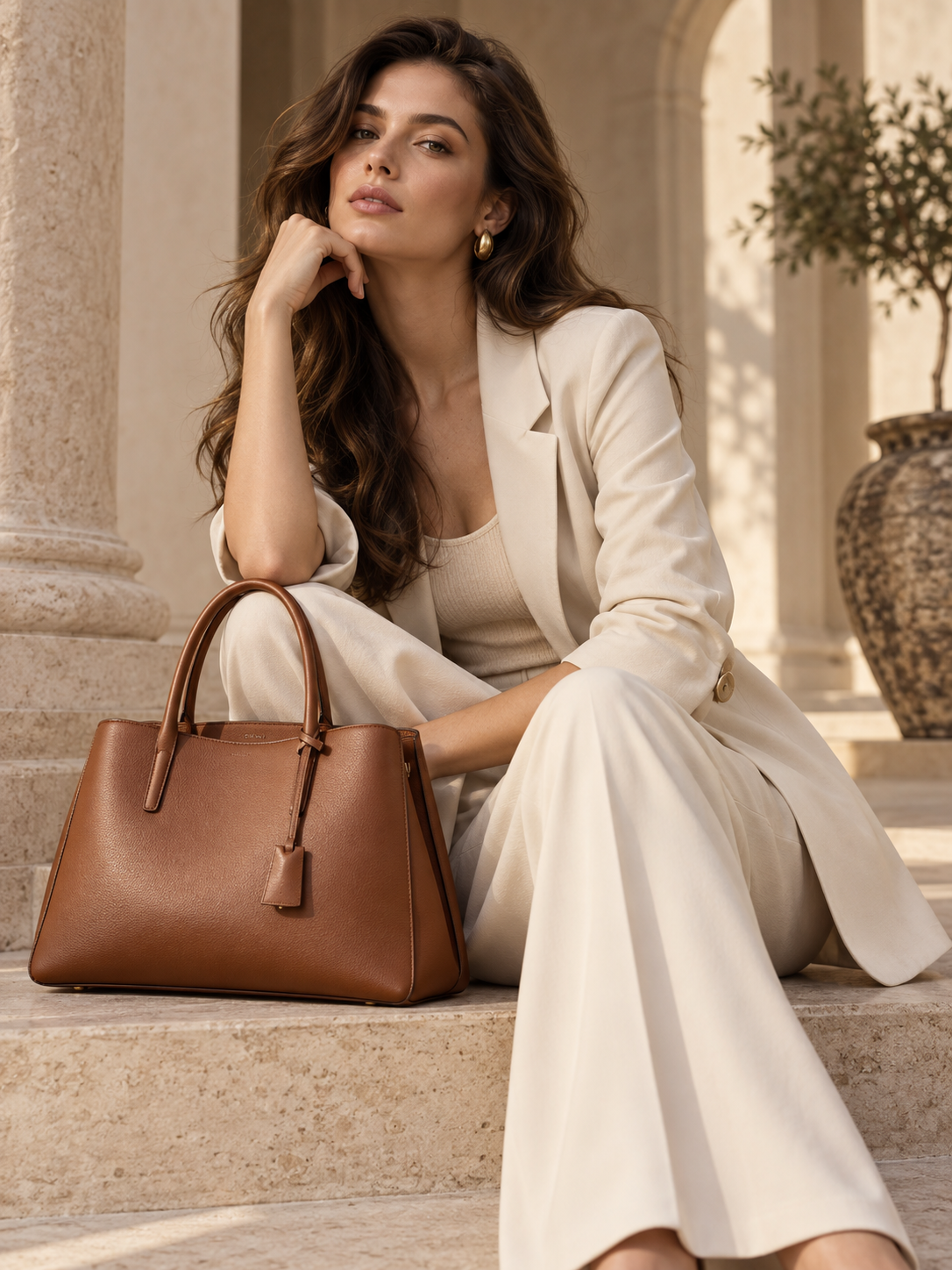
Imagine stepping into a sleek boutique in the heart of 2025—an air of polished creativity envelops you. The walls gleam with custom leather handbags that whisper stories of vivid jewel tones, sculptural hardware, and tactile texture. You’re immediately drawn to a satchel trimmed in gradient suede, its oversized buckle shining like sculpted brass. A quiet sense of wonder fills you—the next-generation customer craves not just functionality, but personality woven into every stitch.
In this post, we’ll guide designers, artisans, and boutique brands through the most compelling handbag trends of 2025 and show how to infuse those details into custom leather creations. Drawing on market insights, design examples, and forward-looking case studies, our goal is to inspire creativity while grounding design decisions in market relevance.
Understanding the Handbag Market in 2025
Before designing, it’s smart to understand the context. The global handbag market has seen impressive momentum. For example, one report projects it will grow from about $63 billion in 2024 to nearly $68 billion in 2025, reflecting a CAGR of 7–7.7%.
Fortune Business Insights estimates a similar trajectory—from $56.5 billion in 2024 to $60.3 billion in 2025, with a sustained CAGR into the decade.
When we zoom into the luxury handbag segment, it’s still expanding—bellwethers show the luxury market reaching $35.8 billion in 2025, up from $33.8 billion in 2024, growing steadily at nearly 6% CAGR. On the U.S. front, the luxury segment is poised to reach $11.99 billion in 2025, growing at 4.7% annually.
In tandem, a notable trend: the men’s handbag category is booming. A Financial Times article reports a 900% surge in online searches, with celebrities and athletes embracing oversized totes and Birkin-style styles—fueling demand for bold, unisex designs.
With these figures in mind, it’s clear: the market is growing, women’s and men’s segments are thriving, and consumers increasingly seek designs with both substance and flair. Let’s explore what those trend-forward details look like in 2025.
The Key Design Trends for Leather Handbags in 2025
What are the textures, shapes, and signatures defining 2025? Here’s what the experts—Vogue, Marie Claire, Glamour, and others—are calling out:
1. Shapes You Can’t Ignore
- East–West silhouettes: those horizontally oriented bags—wearable and versatile—are everywhere.
- Doctor bags: classics reinvented with luxe textures and boldness, seen at Hermès, The Row, Jil Sander.
- Top-handle and roomy Suede bags: a major Autumn 2025 theme—like elegant totes reimagined in soft, earth-toned suede.
- Y2K revivals: Chloé’s Paddington, Padlock designs and early-2000s charms are influencing new launches.
2. Textures and Materials
- Suede dominance: neutral-toned suede bags are noted as “fall’s most versatile accessory,” worn by Jennifer Lawrence and Bella Hadid alike.
- Quilted & puffed: Balmain, Miu Miu, Jil Sander delivering quilted crescent bags and padded structures full of tactility.
- Gradient leather, snakeskin, and padlock hardware: Brown suede and brown/grosgrain gradient leathers replace traditional black; snakeskin rises over leopard; Padlock hardware echoes past Y2K style.
3. Functional Flourishes and Accessibility
- Fun and functional charms: Bag charms, subtle embellishments, and girlish details like pearls and florals—making quiet statements—still trend.
- Extra pockets & market totes: Mesh market totes, external pockets for phone access—both practical and playful.
With these tangible trends identified, how do you integrate them into bespoke leather creations that feel fresh yet wearable?
How to Integrate Trends Into Custom Leather Designs
Let’s explore ways to thoughtfully blend trend-forward details into your custom leather designs, with real-world inspiration.
1. Mix Trend with Timeless
Incorporate sliding elements—maybe swap out a bag’s strap hardware or color for elsewhere in the season—to keep pieces current without discarding core craftsmanship. A custom atelier, for instance, reported a 40% sales bump after introducing seasonal hardware options that customers could choose between, all while using unchanged body patterns.
2. Modular and Personalizable Features
Offer detachable straps, interchangeable panels, or trend-inspired clutches that can reconfigure a base bag. Embossed logos or monograms in up-to-date fonts (e.g., Y2K padlock motif or embossed snakeskin panel) allow for personalization. This “mix-and-match” model allows clients to switch between sueded East–West silhouette days and quilted crescent evenings.
3. Strategic Hardware Partnerships
Work closely with hardware suppliers so you can access timely elements—like gradient buckles, padlock closures, or sculptural metal clasps—in limited drops. Adaptive hardware can refresh a main silhouette with minimal production overhaul.
4. Story-Driven Messaging
Don’t forget narrative—customers love a good backstory. For example, a custom brand could highlight that its gradient suede tote is crafted with Italian-dyed leather, known for sustainable tanning techniques, and the crescent quilting is inspired by architectural curves of Art Deco heritage in the designer’s hometown.
The right details elevate design, but deeper drivers—like sustainability and storytelling—are equally critical in 2025.
Sustainability and Storytelling: The Hidden Trend Drivers
Eco-conscious consumers demand fashion with integrity. Leather accessory brands should lead with green decisions and authentic narratives.
1. Eco-conscious Materials and Finishes
Suede and leather in softer, natural brown tones are rising, in part because they pair well with earth-tone wardrobes—and because biodegradable finishes and eco-tanning are gaining favor. Highlighting leather from vegetable-tanned or chrome-free processes addresses ethical expectations without sacrificing sophistication.
2. Craft and Transparency as Value
Consumers want provenance. If your atelier uses recycled lining materials or sources leather from traceable ranches, make it part of your design story. A case study: A custom French leather studio gained visibility after spotlighting its local tannery partnerships—leading to a feature in a regional fashion magazine and a 25% increase in custom orders.
3. Nostalgia and Heritage in Storytelling
The revival of early-2000s “It bags” (like Chloé’s Paddington) isn’t just style—it’s emotional resonance. Metrics show search interest spiked dramatically (Chloé Paddington searches soared 339%, Celine Phantom 360%) after these reissues surfaced. Use this to your advantage: a custom bag inspired by a beloved early-2000s silhouette sells not just style, but sentiment.
As you marry trend and sustainability, you’ll want practical steps to test and deploy detail updates efficiently.
Practical Guide: Adding Trend Details Without Overhauling Your Production
Here’s how to make design updates smooth and cost-aware:
1. Quick Updates You Can Make
- Hardware swaps: Introduce a new buckle, zipper pull, or clasp design to existing silhouettes.
- Trim variations: Add suede sleeve overlays, quilted piping, or gradient dye edges to existing bags.
- Accessory add-ons: Designing detachable charms, keychains, or monograms enables clients to refresh their look instantly.
2. Low-Cost Experimentation
Produce limited runs with seasonal fabric trims (e.g., raffia panels or soft yellow suede) to test trends without reworking the pattern. These can be sold as “limited editions” and priced strategically to gauge demand.
3. Tech-Assisted Visualization
Use 3D bag-design software to mock up trend details—like East–West bags in butter yellow suede or quilted crescent shapes—before committing to physical prototypes. This reduces waste and helps foresee structural needs (like gusset depth for quilting).
Example Application
Imagine you already produce a classic tote. This season, you offer two “trend-infused” versions:
- Suede East–West charm tote: same base, trimmed in soft brown suede, with padlock hardware.
- Quilted crescent strap bag: an attachable crescent flap add-on in quilted leather that transforms the tote into an evening sling.
Both use existing molds, just new components—streamlined, fresh, and cost-effective.
Staying Ahead in the 2025 Leather Handbag Market
Handbag trends in 2025 reflect a unique blend of nostalgia, sustainability, and function-forward elegance. From suede and quilted leather to padlock hardware and East–West silhouettes, these details speak volumes—but best when balanced with timeless structure.
Understanding an expanding market—driven by both women’s and men’s demand and buoyed by personalization opportunities—helps guide savvy design strategy. Use modularity, narrative, and efficient production to introduce trends without scaling risk.
As you move forward:
- Audit your current lineup: Which silhouette could adopt a trending material or hardware easily?
- Test two trend infusions: Maybe suede straps or modular charms this quarter.
- Tell a story: Narrate the craft, heritage, or inspiration behind each detail.
Ultimately, 2025’s most compelling leather designs are those where innovation harmonizes with craftsmanship—and trends are embraced as tools to enhance, not overpower, custom expression.