You’ve sketched the perfect custom crossbody bag: right size, perfect pocket layout, and the hardware that clicks just right. But then comes the big question—what leather should you choose? Pick wrong and your daily companion could scuff, sag, or show stains in months. Pick right and it becomes a weatherproof partner that only gets better with time.
This guide walks you through the most common leather options, what they do (and don’t do), how to match them to real-life habits, and how to keep your bag looking great for years. Along the way I’ll share concrete examples and practical tips so you can decide confidently.
Leather basics — what the common terms actually mean
Before we compare leathers, it helps to understand the vocabulary.
- Full-grain leather is cut from the outermost layer of the hide and retains the natural grain and marks. It’s the most durable and develops a rich patina over time.
- Top-grain leather is also high-quality but the surface is sanded or corrected for a more uniform look; it’s often thinner and softer than full-grain and won’t develop the same heavy patina.
- Genuine leather is a catch-all for lower-quality layers of the hide that are processed to appear uniform; it’s typically less durable.
- Corrected-grain, split, and bonded leathers are generally lower on the durability scale and can show wear sooner.
- Vegan leathers (PU, microfiber) are synthetic options that can be lighter and water-resistant but don’t breathe like animal leather.
Why this matters for everyday use: durability, weight, water resistance, scratch resistance, and maintenance all start from those basic material choices. Later sections translate these traits into real-life recommendations.
Head-to-head — which leathers fit everyday life
Here I compare the leather types you’ll most commonly be offered when customizing a crossbody bag, and give real-world examples of when each shines.
1. Full-grain leather — the heirloom option
- Pros: strongest, ages beautifully, long lifespan.
- Cons: heavier, more expensive, needs some care.
- Example: If you commute by bike or on foot and want a bag that will look better with time (think warmth and character from use), full-grain is an excellent choice. It’s the leather that often becomes a family heirloom when properly maintained.
2. Top-grain leather — polished and practical
- Pros: lighter, smooth finish, looks refined.
- Cons: slightly less rugged than full-grain, less dramatic patina.
- Example: A creative professional who meets clients and needs a sleeker silhouette but still wants sturdy performance will often pick top-grain. It’s also a common choice when you want to emboss or print a logo cleanly.
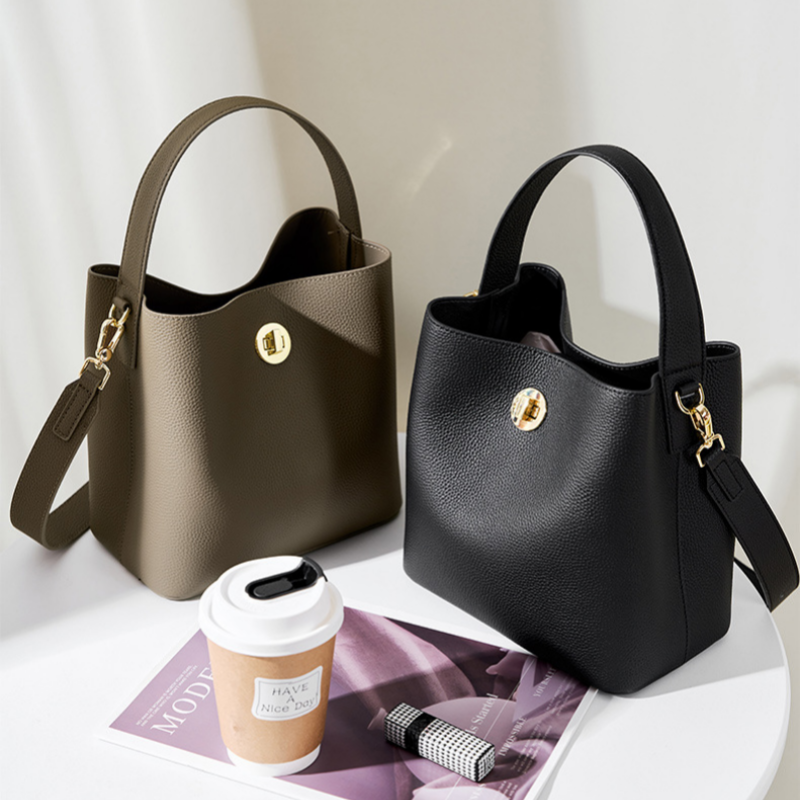
3. Pebbled (textured) leather — great for heavy daily wear
- Pros: texture hides scratches, forgiving surface, comfortable hand.
- Cons: can be slightly bulkier visually.
- Example: Parents or field sales reps who toss the bag in and out of cars and need it to look good despite knocks will appreciate pebbled leather’s scratch-masking qualities. Sources note pebbled finishes help mask wear and tear.
4. Saffiano and coated leathers — the commuter’s best friend
- Pros: highly water-resistant, scratch-resistant, very low-maintenance.
- Cons: coated surface reduces natural patina; often made from corrected leathers or synthetics.
- Example: High-volume commuters and travelers often choose Saffiano-style finishes because the waxed embossing sheds water and holds up to frequent exposure, which is why luxury houses use similar coatings for travel accessories.
5. Nubuck / Suede — luxe but high-maintenance
- Pros: plush, soft, luxurious look.
- Cons: attracts stains, tough to clean, not ideal for wet or rough environments.
- Example: If you mostly use your crossbody on dry days and want a soft-touch aesthetic, suede rewards careful owners—but it’s not the best for everyday commuter life.
Now that we’ve sketched the strengths and weaknesses for each leather, let’s match those to everyday lifestyles so you can decide which one fits your routine.
Match leather to lifestyle (real-life profiles)
Below are typical daily routines and which leather I’d recommend for each—complete with an example scenario.
1. The daily commuter (public transit, occasional rain)
- Recommendation: Saffiano or coated top-grain.
- Why: water- and scratch-resistance plus easy cleaning—ideal for rainy mornings and crowded buses. Example: a city account manager who commutes 40 minutes daily and tosses a bag under a café table benefits from low-maintenance coatings. Industry descriptions of Saffiano emphasize its water-resistance due to waxed coatings.
2. The style-first professional (client meetings, polished image)
- Recommendation: Top-grain or high-quality full-grain.
- Why: you’ll want a refined finish and elegant silhouette—top-grain gives a smooth look while full-grain adds long-term character. Example: a freelance consultant who wants a slimmer, professional crossbody that still lasts for years chooses top-grain for a balance of style and durability.
3. The active parent or photographer (rough handling, gear inside)
- Recommendation: Pebbled full-grain or pebbled top-grain.
- Why: texture hides scratches and scuffs, and full-grain gives durability under load. Example: a wedding photographer who carries lenses and swaps cards needs a rugged yet presentable bag—pebbled grain keeps it looking good through heavy use.
4. The budget-minded buyer who wants good value
- Recommendation: High-quality top-grain or premium PU (if animal products are a concern).
- Why: top-grain can offer great durability at a lower price than top-tier full-grain; modern PU leathers can be remarkably resilient for daily city use. Example: a young professional buying their first “real” bag might choose top-grain for the best balance of cost and longevity.
5. The occasional user who values texture (weekend outings)
- Recommendation: Suede or nubuck, used selectively and stored carefully.
- Why: these materials reward careful wearers but show stains quickly. Example: a weekend traveler who wants a soft, high-fashion bag for brunches and events will accept the extra care responsibility.
After choosing a material, customization decisions and construction details further shape how a bag performs every day. Let’s cover those.
Customization choices that matter (and how leather reacts)
Different leathers behave differently when you emboss logos, add hardware, or specify strap thickness.
- Embossing & stamping: Smooth top-grain takes crisp embossing best. Deep, natural grain (full-grain) can dull fine details, so designers either size up the logo or use a leather type with a smoother face.
- Edge finishing: Coated leathers (Saffiano) accept sealed edges and painted finishes well; untreated full-grain often looks better with burnished edges for a craft finish.
- Hardware and strap thickness: Thinner leathers can lead to heavier hardware pulling through—if you want heavy brass buckles, choose thicker full-grain for structural support. Example: designers often specify a 2.0–2.5 mm thickness for shoulder straps on top-grain, and 2.5–3.5 mm for full-grain to resist stretching. (If you want exact industry specs for production, your maker can give tannery sheet dimensions.)
Choosing and customizing your leather is part of the decision—how you treat the bag after purchase really determines how long it will last. So let’s go into practical care routines.
Care and maintenance: small steps that extend life dramatically
Good care practices vary by leather, but a few rules apply across the board.
- Clean first, condition after. Remove surface dirt before applying conditioners. Most guides recommend conditioning every 3–6 months depending on use—more often for heavy daily wear.
- Waterproofing: For leathers that aren’t already coated (full-grain, suede), use a tannery-approved waterproofing or protector and always test on a hidden area first. A recommended approach is to clean, test, then apply a thin protective spray per the product’s instructions.
- Suede and nubuck care: Use a dedicated suede brush and protector; avoid water exposure.
- Storage: Stuff the bag with acid-free tissue and store away from direct sunlight. Avoid hanging a crossbody by one strap for months—rotational use keeps stress even.
- Minor repairs: A well-chosen leather conditioner and polish can remove light scuffs from smooth top-grain and some full-grain leathers; deeper damage should go to a professional.
Real-life micro case: Two identical top-grain crossbodies, one conditioned quarterly and stored properly, one left in sunlight and never conditioned—after 3 years the conditioned bag retained color and suppleness while the other showed cracking and faded tones. This is a small but common example of how maintenance changes longevity.
Quick comparison table (summary)
Short digest to help decide quickly
| Full-grain | Highest durability, heavy, ages with patina. Best for longevity and character. |
| Top-grain | Sleek look, lighter, good durability. Best for professional silhouettes. |
| Pebbled | Scratch-masking, forgiving. Best for rougher daily handling. |
| Saffiano / coated | Water- and scratch-resistant, very low maintenance. Best for commuters and travelers. |
| Suede / nubuck | Luxurious but needs careful use. Best for occasional wear. |
Final decision checklist — five quick questions to choose the right material
- Will the bag be exposed to rain or heavy commuting? If yes → Saffiano/coated.
- Do you want the bag to develop patina and get character over time? If yes → full-grain.
- Do you need the bag to hide scratches and hard knocks? If yes → pebbled leather.
- Is a sleek, uniform finish important for client-facing settings? If yes → top-grain.
- Are you budget-conscious or prefer vegan options? Consider high-quality PU or microfiber and check the maker’s production specs.
choose function first, style second (and you’ll be happiest)
When choosing a leather for a custom crossbody bag, start from your daily life—not just what looks good on a product page. If you commute, prioritize water- and scratch-resistance; if you want lifelong character, choose full-grain and commit to regular conditioning; if your routine is rough, pick textured pebbled grains.
To recap the core takeaway: for everyday use, durability, ease of maintenance, and weight are more important than chasing the fanciest finish. That’s why Saffiano and pebbled top-grain options are consistently chosen by heavy users, while full-grain is the pick for owners who want the bag to grow with them.
If you’re working with a maker on a custom build, bring this checklist to the conversation: describe your daily routine, specify desired hardware weight and strap thickness, and ask for leather swatches. If possible, request a small sample or swatch to press, fold, and test—feeling the leather in hand is the best final check.