A Practical Guide for Fashion Brands, Private Label Buyers, and Product Developers
When sourcing a custom bag manufacturer, you will often encounter two terms: OEM and ODM.
Both manufacturing models allow fashion brands, retailers, and private label businesses to develop products without operating their own factory. However, they differ in an important way: where the product design comes from and how much development work is required.
With OEM bag manufacturing, the brand generally provides the original design and the manufacturer develops or produces the bag according to its specifications.
With ODM bag manufacturing, the starting design is usually provided or developed by the manufacturer and then adapted to the buyer’s requirements.
Choosing between them affects development responsibilities, sampling, costs, timelines, customization, and design rights.
This guide explains how OEM and ODM work in the bag industry, when each approach makes sense, and what to clarify before requesting a quotation.
What Is the Difference Between OEM and ODM Bag Manufacturing?
The simplest distinction is:
OEM = Your design, manufactured by a factory.
ODM = A manufacturer-developed design, adapted for your brand.
In real handbag projects, the boundaries can be less rigid. A buyer may provide sketches and ask a factory to develop the construction, or may start from an existing style but request substantial structural modifications.
For that reason, it is more useful to confirm the design responsibilities and approved specifications than to rely only on the OEM or ODM label.
OEM vs ODM Bag Manufacturing Comparison
| Factor | OEM Bag Manufacturing | ODM Bag Manufacturing |
|---|---|---|
| Starting design | Buyer-provided design or specification | Manufacturer-developed design or starting style |
| Design control | Buyer directs the intended product specification | Buyer adapts an existing or supplier-led design |
| Development work | May require substantial pattern development and sampling | May reuse existing development work |
| Customization | Defined around buyer requirements and technical feasibility | Depends on how much the base design can be modified |
| Initial development cost | Often higher for a genuinely new design | May be lower if suitable designs and patterns already exist |
| Sampling | New samples and revisions may be necessary | Existing samples may provide a starting point |
| Production timeline | Depends on design readiness and development complexity | May be shorter when the base style is production-ready |
| MOQ | Determined by materials, components, and production conditions | Also project-specific; not automatically lower |
| Design rights | Depend on original ownership and written agreements | Require clarification of base-design and modification rights |
| Best suited for | Distinctive brand-developed products | Brands using or adapting manufacturer-led designs |
Neither model guarantees better quality, a lower unit price, or a particular order quantity.
The right model depends on your design requirements and how you intend to position your collection.
Ready to move from comparison to product development? Explore our OEM & ODM Bag Manufacturing service for technical review, sampling, and production.
1. What Is OEM Bag Manufacturing?
OEM stands for Original Equipment Manufacturer.
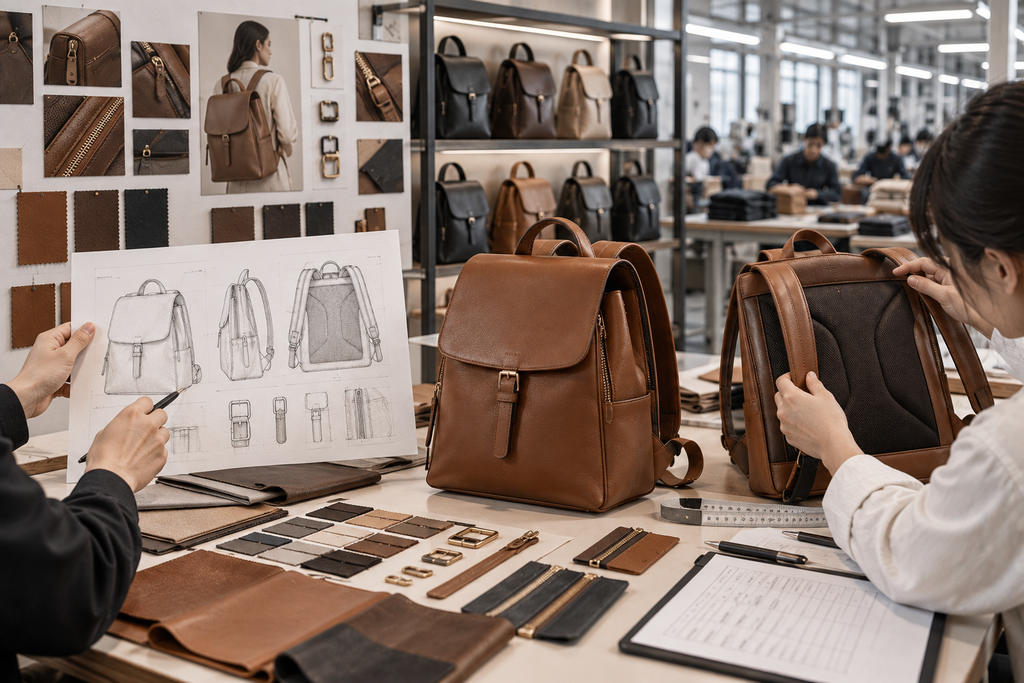
In custom bag production, OEM commonly describes a project in which the buyer provides the product design or defines the intended specifications, while the manufacturer handles production and related technical work.
For example, a fashion brand may provide:
- A handbag tech pack
- Front, side, and interior drawings
- Confirmed dimensions
- Leather or alternative material specifications
- Handle and strap measurements
- Closure and hardware requirements
- Logo artwork and placement
- Packaging requirements
The manufacturer reviews these specifications, evaluates production feasibility, develops samples where needed, and manufactures the approved design.
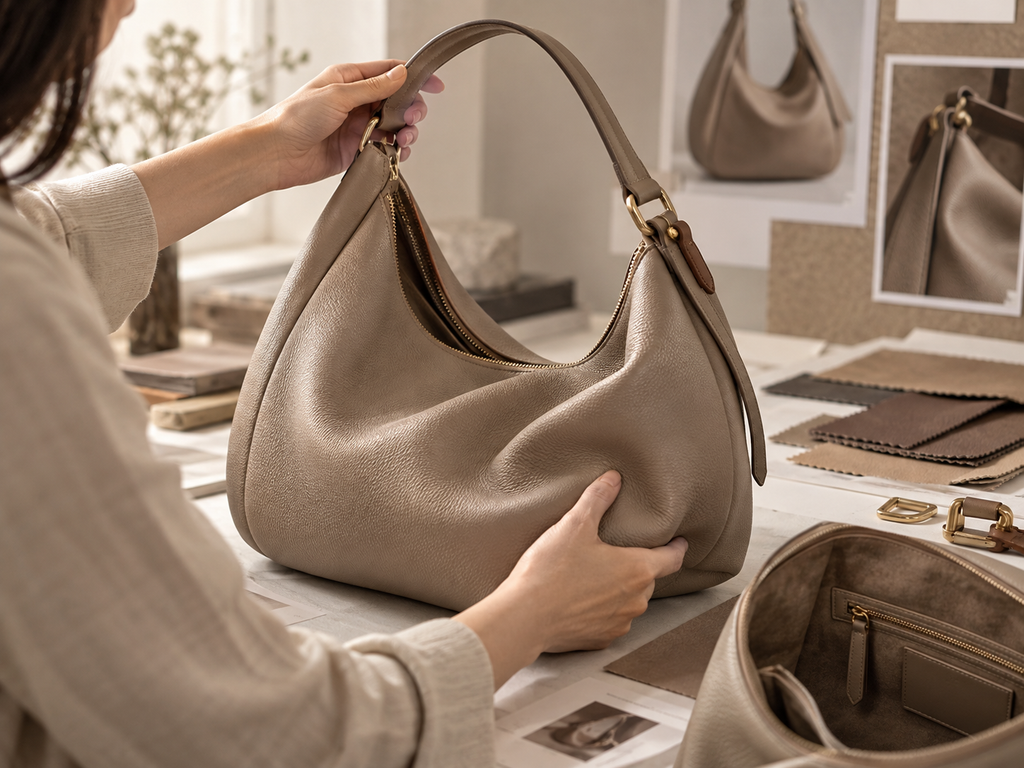
Example: Developing a Custom Leather Shoulder Bag
Imagine a brand developing a distinctive leather shoulder bag.
The design includes a curved body, specific strap proportions, an asymmetric opening, custom hardware, and an interior layout unique to its collection.
The brand provides drawings, dimensional requirements, and design references.
The manufacturer then helps translate those requirements into physical samples and a production-ready specification.
This is a typical buyer-led OEM development project.
Benefits of OEM Bag Manufacturing
Greater design differentiation
OEM allows a brand to develop products around its own intended silhouette, construction, materials, and visual identity.
More direct control over product specifications
The buyer can define essential features and review the actual result through sampling.
Consistency across future collections
Once the approved design and production specifications are established, they can provide a reference for repeat orders or related styles.
Challenges of OEM
A new design may require additional pattern development, material sourcing, construction testing, specialized hardware, and sample revisions.
These activities can increase initial development work.
The buyer also needs to communicate requirements clearly and approve changes before production.
OEM is therefore especially suitable when a distinctive design is central to the brand’s product strategy.
2. What Is ODM Bag Manufacturing?
ODM stands for Original Design Manufacturer.
In its conventional meaning, ODM refers to a manufacturer that designs a product and offers that design as a starting point for another company’s branded product.
A buyer may select an existing handbag style and request changes to its material, color, hardware, lining, branding, or packaging.
Some manufacturers also use ODM more broadly for supplier-assisted development from an early product concept or reference image.
These two arrangements are related but not identical. Always ask whether the project begins with a manufacturer-owned design, a licensed design, or a new jointly developed specification.
Example: Adapting an Existing Tote Bag
Imagine a retailer looking to introduce a small tote collection.
Rather than designing an entirely new silhouette, the retailer selects a suitable existing style offered by a manufacturer.
The retailer requests:
- A different exterior material
- Brand-specific colors
- A customized logo application
- Modified lining
- Different hardware finishes
- Branded hangtags and packaging
If the base design and tooling are already available and suitable, the manufacturer may need less development work than for a completely new bag.
However, the proposed changes must still be reviewed and sampled where necessary.
Benefits of ODM Bag Manufacturing
A practical starting point
Brands without a complete technical design may be able to start from an existing developed style.
Potentially lower development requirements
Using proven patterns or construction can reduce some design and sampling work.
Potentially faster development
If compatible materials, components, and approved patterns are available, the project may move through development more quickly.
Challenges of ODM
Customization may be limited by the original construction.
The base design may be offered to multiple customers unless a separate exclusivity arrangement is established.
Major structural changes can also eliminate the expected development advantages and effectively turn the project into a substantial custom development exercise.
ODM is useful when an existing design is compatible with the brand’s desired product and differentiation requirements.
3. OEM vs ODM vs Private Label: Are They the Same?
OEM, ODM, and Private Label are often used together on manufacturer websites, which can create confusion.
They describe different aspects of product sourcing.
OEM and ODM primarily describe the design and development relationship. Private Label describes the commercial arrangement of selling products under your own brand.
A private label product can be manufactured through an OEM project, an ODM project, or a relatively simple branding arrangement.
| Model | Practical Meaning | Example |
|---|---|---|
| OEM | Manufacturer produces a buyer-directed design | A unique handbag developed from the brand’s tech pack |
| ODM | Manufacturer provides or develops the starting design | A factory-developed shoulder bag adapted for a retailer |
| Private Label | Product is sold under the buyer’s brand | A branded tote with custom logo, label, and packaging |
Is Private Label Always ODM?
No.
A brand can commission a fully custom OEM handbag and sell it under its private label.
Another brand may place its logo and packaging on an existing manufacturer-developed style.
Both products can be private label, despite having different development histories.
When contacting a supplier, explain the actual customization requirements rather than asking only whether it supports “private label.”
If your priority is selling bags under your own brand, explore our Private Label Bag Manufacturing service.

4. Which Is More Expensive: OEM or ODM Bags?
There is no universal answer.
An entirely new OEM handbag may involve more initial development expense than an ODM style that already has patterns and available components.
However, the final unit manufacturing cost is determined by the actual bag specification.
Important factors include:
- Main material and material consumption
- Bag size and construction complexity
- Reinforcement and lining
- Zippers, buckles, and other hardware
- Logo application and tooling
- Order quantity and color breakdown
- Packaging requirements
- Quality requirements
- Production and shipping terms
An OEM bag with simple construction and standard hardware may cost less per unit than a highly customized ODM bag made with more expensive materials.
Development Cost vs Unit Cost
It is important to separate the initial cost of developing a product from the recurring cost of manufacturing each unit.
A project budget can be viewed as:
Total Project Cost = Development Costs + Production Costs + Packaging + Logistics + Other Applicable Charges
Development costs may include sample-making, pattern development, special tooling, and additional revisions.
Production costs include the materials, components, manufacturing operations, and services specified in the quotation.
To compare OEM and ODM fairly, request quotations using equivalent materials, quantities, quality requirements, and delivery terms.
5. Does ODM Always Have a Lower MOQ Than OEM?
No. A lower MOQ is possible with some ODM projects, but it is not guaranteed.
MOQ depends on the bag’s manufacturing requirements rather than its design-origin label alone.
For example, an ODM style using standard components and readily available materials may be easier to produce at a lower quantity.
But if the buyer requests a custom-colored material, specialized hardware, or a new component with its own supplier minimum, the required quantity may increase.
Similarly, an OEM design using available materials and conventional construction may be feasible at a relatively modest production quantity.
When requesting a quotation, ask:
- Is the MOQ calculated per style or per color?
- Do custom materials have separate minimums?
- Does custom hardware require a higher quantity?
- Can quantities across different colors be combined?
- How does unit pricing change at different quantities?
Cassitybag states that its MOQ starts from 100 pieces per style for selected custom bag projects, with actual minimums varying by design and customization requirements.
6. OEM vs ODM Sampling: What Changes?
Both OEM and ODM projects can require physical sample approval before bulk production.
The main difference is how much of the product needs to be developed or verified.
OEM Sampling
For a new buyer-directed design, the manufacturer may need to develop or adapt patterns and confirm construction details before producing the first physical sample.
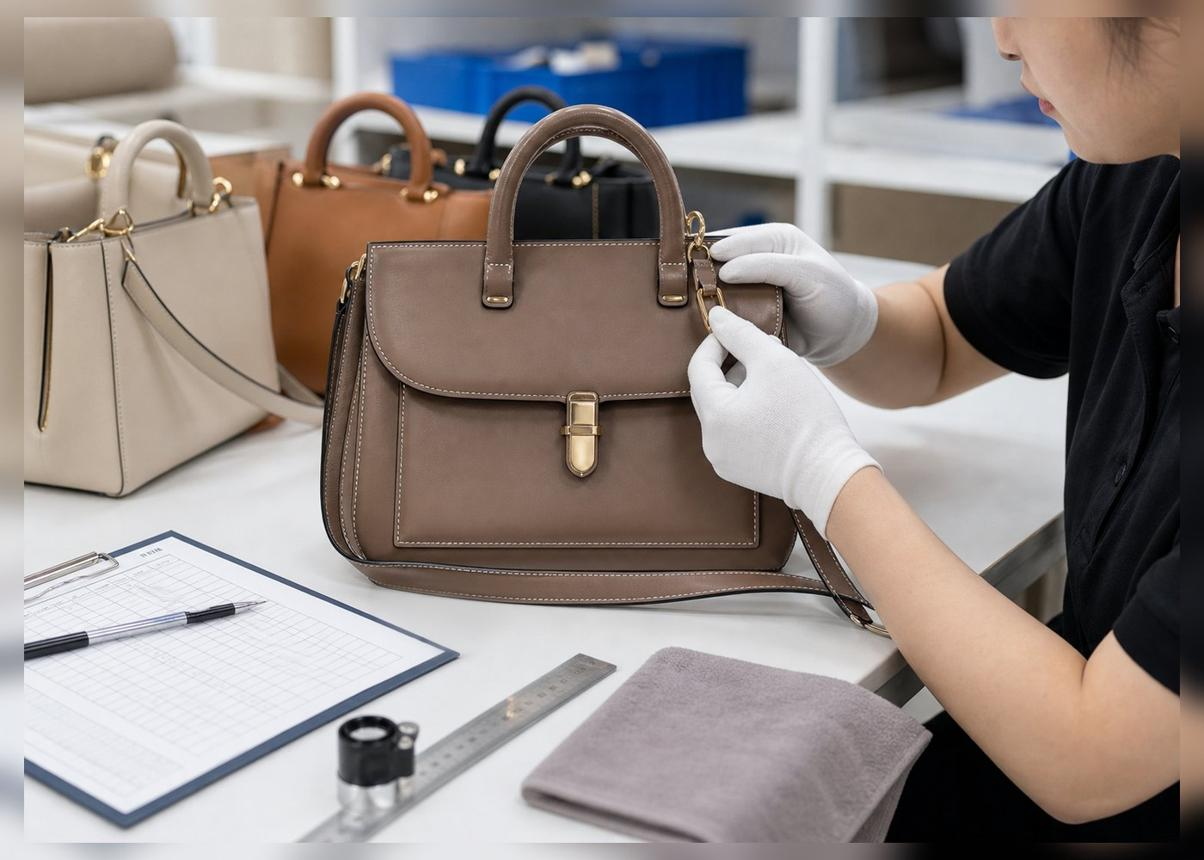
The sample should be checked for:
- Overall silhouette and proportions
- Dimensions
- Material and color
- Strap and handle construction
- Opening and closure
- Lining and internal compartments
- Hardware placement
- Logo application
- Stitching and edge finishing
Revisions may be necessary before production approval.
ODM Sampling
For an existing design, a reference sample may already be available.
However, changing materials, proportions, closures, or hardware can affect how the bag behaves.
A production-intent sample should therefore reflect the actual approved configuration, not merely the original catalog style.
Why Sample Approval Matters
Regardless of manufacturing model, the approved sample and written specifications should establish what the factory is expected to reproduce.
Ask how approved changes are recorded and how bulk production will be checked against them.
You can review Cassitybag’s custom bag ordering process for the general sequence from requirements to quotation, sampling, bulk manufacturing, and quality control.
7. Who Owns the Design in OEM and ODM Manufacturing?
Design ownership is an important issue, particularly for brands developing distinctive handbag collections.
However, OEM does not automatically guarantee that every design file, pattern, mold, or development result belongs to the buyer.
Ownership depends on existing intellectual property rights, applicable law, and the specific contractual agreement.
Questions for OEM Projects
If you provide an original design, clarify:
- Who owns the original design and technical drawings?
- Who owns newly developed patterns?
- Can the manufacturer reuse the design?
- Who owns custom molds or tooling?
- Can you transfer production to another manufacturer?
- How are confidential materials protected?
Questions for ODM Projects
When starting from a manufacturer-developed design, ask:
- Who owns the original base design?
- Is the design also available to other buyers?
- Can your modified version be sold to other brands?
- Is exclusive production available?
- Who owns any new patterns or tooling?
- What happens if you change suppliers?
Do not assume that adding a logo makes an existing design exclusive.
A nondisclosure agreement may help protect confidential information, but it does not by itself establish ownership or exclusivity.
For commercially significant designs, have the relevant agreements reviewed by an appropriate legal professional.
8. Which Manufacturing Model Is Faster?
ODM can be faster when the manufacturer has an existing production-ready style that closely matches your requirements.
OEM can take more development work when the product needs entirely new patterns, construction solutions, or specialized components.
However, the manufacturing model alone does not determine lead time.
A project can be delayed by:
- Incomplete product specifications
- Material sourcing
- Custom hardware development
- Sample revisions
- Color approvals
- Supplier component minimums
- Production scheduling
- Quality issues or packaging changes
A relatively simple OEM project may be faster than an ODM project requiring extensive redesign.
Instead of choosing solely on a claimed lead time, ask the factory to distinguish between the sample development period, revision period, and bulk production period.
Make sure you understand when the quoted production timeline begins.
9. Can You Start OEM Bag Manufacturing Without a Tech Pack?
Yes, an initial buyer-led custom development discussion can begin without a complete tech pack.
A brand may have a clear design concept, reference images, sketches, or a physical sample but still need help developing production specifications.
The factory can review feasibility and help identify missing details.
However, the brand should clarify its intended design and approve the final specifications before bulk production.
For an initial discussion, prepare:
| Information | Example |
|---|---|
| Bag type | Leather shoulder bag |
| Design reference | Front, side, and interior images |
| Dimensions | Approximate width, height, depth |
| Material | Preferred leather type or desired appearance |
| Structure | Soft, relaxed, or structured |
| Closure | Zipper, flap, or magnetic closure |
| Branding | Logo method and placement |
| Quantity | Estimated pieces per style and color |
| Packaging | Standard or branded |
| Destination | Delivery country |
If some details are undecided, label them as open requirements.
An incomplete tech pack does not automatically make the project ODM. The more important question is whether the design direction originates with the buyer or the manufacturer.
10. How to Choose Between OEM and ODM for Your Bag Brand
The right model depends on the needs of your business and the current development stage.
Choose OEM When:
- You have an original or clearly defined product concept.
- A distinctive silhouette is important to your brand.
- You need specific construction or component details.
- You want greater control over the final approved specifications.
- You are prepared for product development and sampling.
- You need written clarity around design rights and technical files.
Consider ODM When:
- You want to begin from a supplier-developed design.
- Your design team is limited or you prefer an existing starting style.
- Available silhouettes suit your intended collection.
- You can differentiate through suitable materials, colors, and branding.
- You want to evaluate options that may require less development.
- You understand the applicable exclusivity and modification conditions.
What About a Hybrid Approach?
Some collections combine different development routes.
For example, a brand may commission an original OEM handbag as its signature product while using manufacturer-developed styles for complementary items.
This can be a practical assortment strategy, provided the brand understands each product’s design rights, manufacturing requirements, and commercial positioning.
There is no requirement to use the same development model for every bag in a collection.
11. Questions to Ask an OEM or ODM Bag Manufacturer
Before selecting a manufacturing partner, clarify the following:
- Where does the base design come from? Is it buyer-owned, manufacturer-owned, or being newly developed?
- What can be customized? Can you change dimensions, materials, structure, hardware, and branding?
- What is included in development? Are patterns, samples, or revisions charged separately?
- What is the actual MOQ? Does it apply per style, color, material, or component?
- What design rights are provided? Are patterns, tooling, exclusivity, or transfer rights addressed in writing?
- How is sample approval managed? What documents establish the final product specification?
- What does the quotation include? Clarify unit pricing, packaging, tooling, freight, and payment terms.
- How is quality checked? Ask how production is evaluated against the approved sample.
- What are the project timelines? Separate initial development, sampling, revisions, and bulk production.
- What happens when specifications change? Confirm how price and delivery changes will be approved.
These questions help you compare manufacturers on actual capabilities and obligations rather than marketing terminology alone.
12. How Cassitybag Supports OEM and ODM Bag Projects
Cassitybag works with fashion brands, retailers, product developers, and private label buyers developing custom handbags and other bag collections.
The appropriate development route depends on the information you already have.
OEM: Develop From Your Existing Design
If you have a tech pack, drawings, physical sample, or detailed design specifications, Cassitybag can review the intended silhouette, materials, dimensions, hardware, closure, interior, and branding requirements.
The project moves toward sampling based on the confirmed specifications.
ODM and Concept-Led Development
If your project is at an earlier stage, you can begin with a reference image, existing style, or product idea.
Cassitybag can discuss proportions, materials, construction, closures, and other details that need to be established before sampling.
For projects based on a manufacturer-developed design, any applicable design rights or exclusivity should be clarified separately.
From Sample to Bulk Production
A typical project moves through these stages:
Requirements → Sample Development → Sample Approval → Bulk Production → Quality Control & Packaging
The exact schedule, MOQ, pricing, and available customization depend on the approved project requirements.
Final Thoughts: Choose the Development Route That Fits Your Brand
OEM and ODM are not measures of product quality.
They describe different ways to organize product design and manufacturing responsibilities.
OEM is often appropriate when you have a distinctive design that needs to be developed and produced to your specifications.
ODM can be useful when you want to adapt a manufacturer-developed starting design rather than develop every element from scratch.
For both models, successful production depends on clear requirements, realistic quotations, approved samples, quality expectations, and documented commercial terms.
The most important decision is not simply whether your project is called OEM or ODM. It is whether the development arrangement gives your brand the design, control, cost structure, and production outcome it needs.
Discuss Your OEM or ODM Bag Project With Cassitybag
Have a complete handbag design—or just a product idea?
Cassitybag supports custom bag development for fashion brands and private label businesses.
Share your reference images, drawings, preferred materials, estimated order quantity, and branding requirements. The team can review your project and discuss the information needed to move toward sampling and production.