

Consistent product quality matters when developing handbags for retail, wholesale, and private label collections.
At Cassity, bag manufacturing quality control begins with clearly defined product requirements and an approved sample. Materials, construction, dimensions, hardware, branding, and finishing details provide the basis for reviewing production quality.
We work with fashion brands and sourcing teams to clarify quality expectations before production and address inspection requirements throughout the manufacturing process.
Quality Standards Start With an Approved Sample
A physical sample helps establish what the finished bag should look and feel like.
Before bulk production, important specifications should be confirmed, including:
- Bag dimensions and overall shape
- Materials, colors, and surface finishes
- Stitching, seams, and reinforcement
- Handles, straps, and attachments
- Zippers, clasps, and other hardware
- Lining, pockets, and interior construction
- Logo placement and branding details
The approved sample and written specifications serve as references for evaluating production consistency.
If your design is still being developed, explore our Custom Bag Sampling & Prototype Development services before moving into bulk manufacturing.

The specific checks and inspection arrangements should be agreed according to the project.
For an overview of our manufacturing capabilities, visit Custom Bag Manufacturing Services.
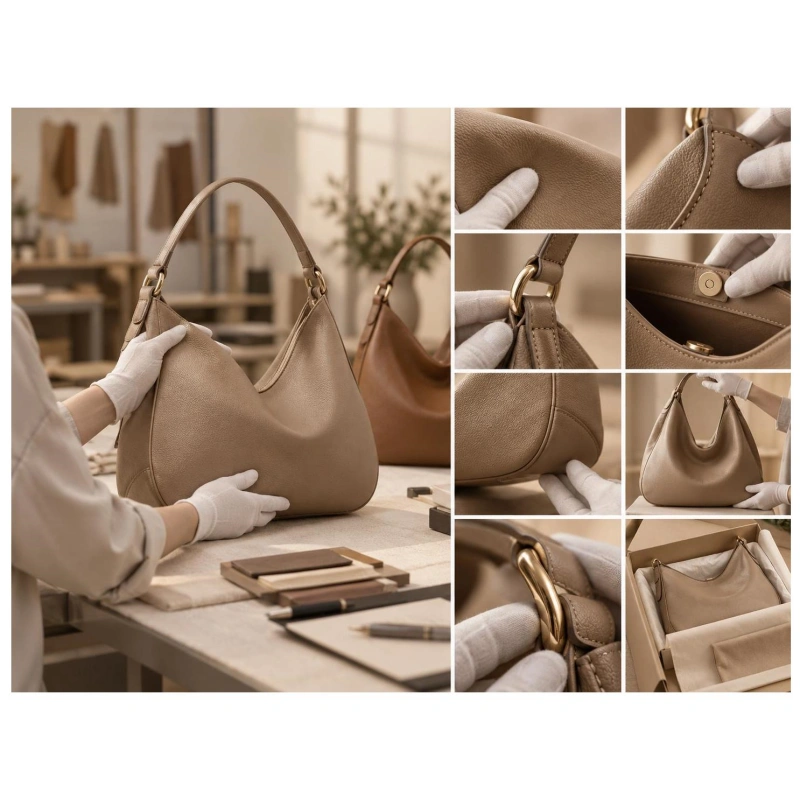
Inspection criteria should distinguish between acceptable manufacturing variation and defects that require correction.
For a practical inspection reference, read our Handbag Quality Control Checklist: What to Inspect Before Shipment.
A pre-shipment inspection may cover:
- Product appearance and workmanship
- Dimensions and construction
- Hardware and zipper functionality
- Logo and labeling accuracy
- Packaging and carton requirements
- Order quantity and assortment
Depending on the project, inspection arrangements may include internal checks or an independently arranged third-party inspection.
Inspection scope, sampling method, acceptance criteria, and responsibility for any third-party service should be confirmed in advance.

A final inspection helps identify visible or functional nonconformities, but it does not guarantee that every defect will be detected.
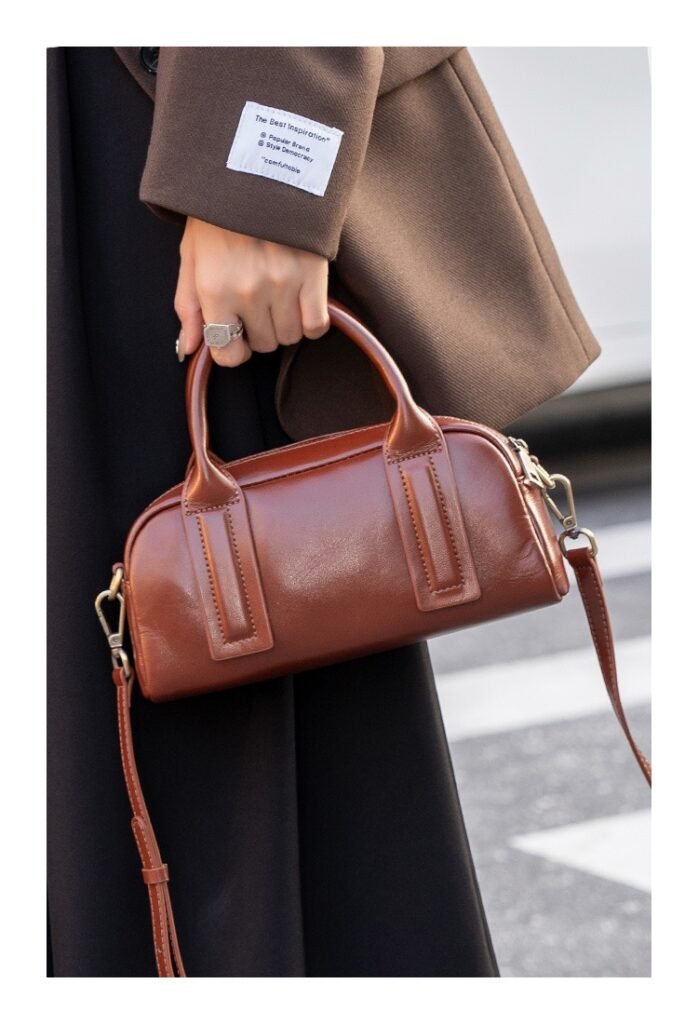
Depending on the type and severity of the problem, possible actions may include:
- Recording the affected product and defect.
- Comparing the issue against the approved specifications.
- Reviewing whether repair, replacement, or further inspection is appropriate.
- Confirming the corrective action and any required reinspection.
Quality requirements and acceptance decisions should be agreed between the buyer and manufacturer before shipment.
For buyers preparing their first production order, our custom bag ordering process explains how product requirements and production approvals fit together.
Custom bags require attention to details that may differ between styles and collections.
For private label production, these may include logo dimensions, label placement, branded hardware, lining colors, packaging, and product consistency across approved variations.
For OEM and ODM projects, the inspection requirements may place greater emphasis on construction details, measurements, custom components, and the approved technical specifications.
Quality expectations should be defined for each project rather than assumed to be identical across all bag styles.

Explore our Private Label Bag Manufacturing and OEM & ODM Bag Manufacturing services to learn more about the different development approaches.
Frequently Asked Questions
Find answers to commonly asked questions about our products and services.