A Practical RFQ Checklist for Fashion Brands and Private Label Buyers
You have a handbag design, a reference image, or an idea for your next collection. Now you need to know how much it will cost to manufacture.
But what information should you actually send to a bag manufacturer to get a useful quote?
A message saying “I want to make 200 leather handbags. How much?” may be enough to start a conversation, but it rarely provides the information needed for a detailed production quotation.
The manufacturer still needs to understand the bag’s design, materials, dimensions, construction, branding, and order requirements.
The good news is that you do not always need a complete tech pack to request an initial quotation. Clear reference images, estimated dimensions, material preferences, and target quantities can provide a useful starting point.
This guide explains what to prepare before contacting a custom bag manufacturer, what information can be confirmed later, and how to write a request for quotation (RFQ) that helps both sides move forward efficiently.
1. What Information Does a Bag Manufacturer Need for a Quote?
A manufacturer needs enough information to understand three things:
- What you want to manufacture: the bag style, design, construction, and materials.
- How you want to customize it: branding, hardware, colors, and packaging.
- How you plan to order it: quantity, development stage, destination, and timing.
Use the following checklist when preparing your first inquiry. Learn How Much Does Custom Handbag Manufacturing Cost?
Custom Bag RFQ Checklist
| Information | What to Provide | Priority |
|---|---|---|
| Bag type | Tote, shoulder, crossbody, hobo, backpack, or handbag | Essential |
| Design references | Sketches, photos, drawings, or an existing sample | Essential |
| Dimensions | Approximate width, height, depth, and strap size | Essential |
| Main material | Preferred leather, PU, microfiber, canvas, or undecided | Essential |
| Estimated quantity | Units per style and, if available, per color | Essential |
| Construction details | Soft or structured body, pockets, closure, lining | Recommended |
| Logo requirements | Artwork, placement, preferred application | Recommended |
| Hardware | Zippers, buckles, clasps, rings, or custom components | Recommended |
| Colors | Desired colors and approximate quantity per color | Recommended |
| Packaging | Standard or branded packaging | Recommended |
| Delivery destination | Country and approximate delivery location | Recommended |
| Timeline | Target sample approval or delivery date | Recommended |
| Target budget | Desired manufacturing price range, if established | Optional |
| Tech pack | Detailed specifications, if available | Optional initially |
You do not need every detail finalized before making contact.
However, any unknown information should be labeled clearly rather than presented as a confirmed specification.
For example, “approximately 28 cm wide, final dimensions to be confirmed” is more useful than providing a guessed measurement as if it were final.
Before submitting your RFQ, it helps to clarify whether your project is OEM or ODM. If you already have an original handbag design or detailed specifications, an OEM approach may be more suitable. If you prefer to start from a manufacturer-developed style and customize it for your brand, ODM may be an option. This distinction helps the manufacturer understand your design requirements and development expectations.
If you have a tech pack, drawings, or a product concept, our OEM & ODM Bag Manufacturing service can help you plan development and sampling. Or learn more in our guide to OEM vs ODM Bag Manufacturing: What’s the Difference?
2. Send Clear Bag Design References
The design reference is one of the most important parts of an RFQ.
It helps the manufacturer understand what you want to produce before discussing materials, construction methods, or production feasibility.
You can start with different types of design information.
Option A: Technical Drawings or a Tech Pack
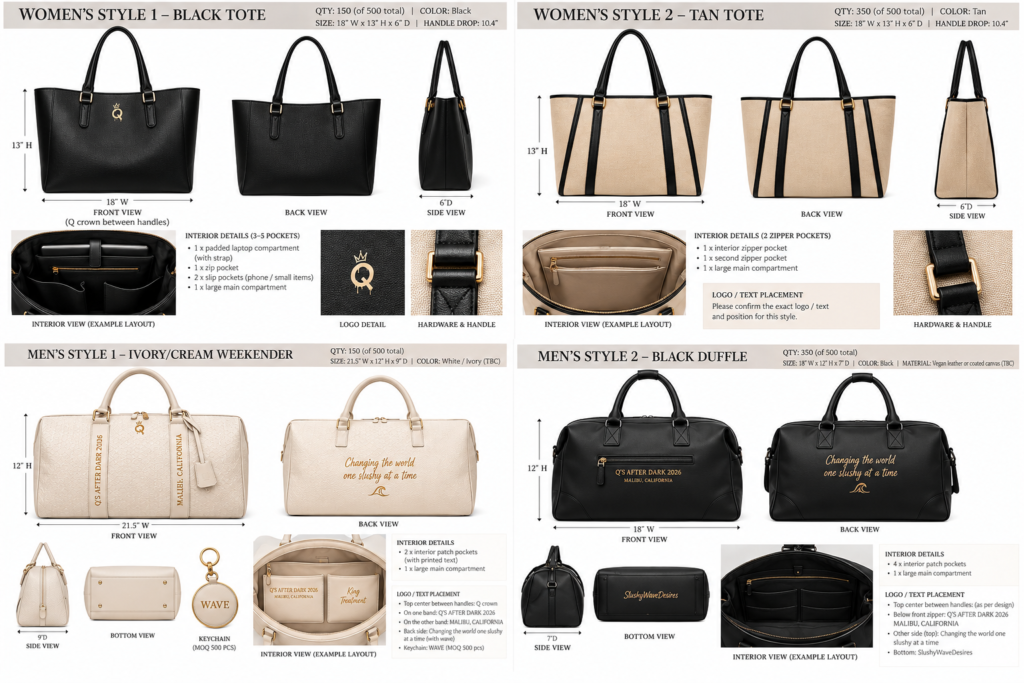
If you already work with a handbag designer or product developer, you may have a detailed technical package.
A handbag tech pack commonly includes technical drawings, dimensions, material information, hardware specifications, branding details, and construction instructions.
The more developed the tech pack, the fewer fundamental design questions may remain before sampling.
However, a tech pack does not automatically guarantee an accurate quotation. Material availability, construction feasibility, and component requirements may still need confirmation.
Option B: Reference Images
If you do not have a tech pack, provide photographs that clearly show the intended handbag design.
Useful images include:
- Front view
- Back view
- Side view
- Bottom view
- Interior and compartments
- Handle or strap construction
- Closure and hardware details
You can also annotate the images to explain which features you want to retain or change.
For example:
“Use the silhouette shown in Image A, but change the opening to a zipper closure and add an interior slip pocket.”
That is considerably clearer than sending several reference images without explanation.
Use reference images to communicate design requirements while ensuring the final product respects applicable intellectual property rights.
Option C: An Existing Physical Sample
An existing sample can help a manufacturer understand the desired proportions, structure, and construction details.
If you own the design or have appropriate authorization, you may send a sample for development or production evaluation.
Make sure you identify any changes required for your new version.
RFQ tip: Name your reference files clearly. For example,
Style-01-Front.jpg,Style-01-Side.jpg, andStyle-01-Interior.jpg.
Learn How to Design Your Own Custom Leather Handbag?
3. Specify the Bag Type and Intended Structure
The bag category provides a starting point, but it does not fully define the construction.
For example, two shoulder bags may have similar dimensions while differing significantly in softness, reinforcement, handle construction, and internal organization.
Your inquiry should identify the basic product type:
- Tote bag
- Shoulder bag
- Crossbody bag
- Hobo bag
- Top-handle handbag
- Backpack
- Another clearly described bag style
Then explain its intended structure.
Soft, Semi-Structured, or Structured?
A soft handbag usually allows more natural folding or drape.
A structured handbag is designed to retain a more defined silhouette, potentially requiring internal supports, reinforcement, or additional construction operations.
A semi-structured handbag may combine a stable overall shape with more flexible panels.
These descriptions help communicate design intent, but the actual construction should be confirmed through materials, technical details, and sample approval.
If you are undecided, tell the manufacturer what appearance you want rather than guessing how it should be constructed.
Brands developing custom top-handle bags, satchels, bowling bags, or structured silhouettes can explore Cassitybag’s custom leather handbag manufacturing services.
4. Provide Approximate Dimensions
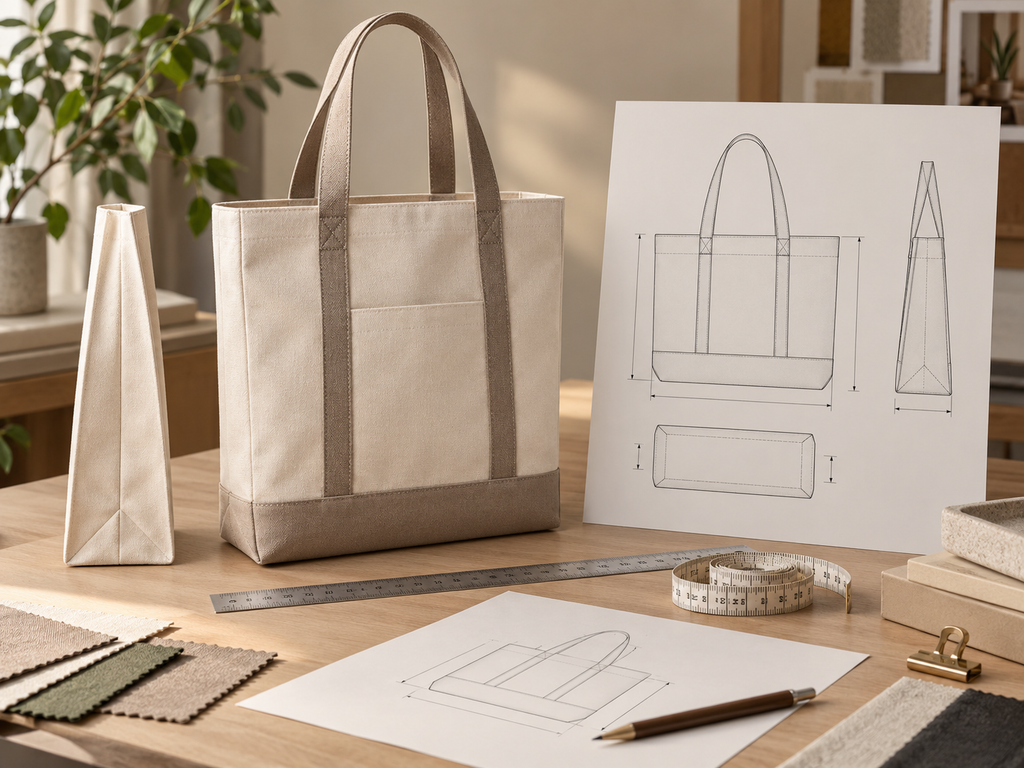
Dimensions are essential because they influence material usage, pattern development, proportions, and construction requirements.
For the bag body, specify:
- Width
- Height
- Depth or gusset
- Preferred measurement unit
For handles and straps, include relevant measurements such as handle drop, strap width, or adjustable strap length.
Example Dimension Specification
| Component | Example Requirement |
|---|---|
| Bag width | Approximately 28 cm |
| Bag height | Approximately 20 cm |
| Bag depth | Approximately 9 cm |
| Handle drop | Approximately 12 cm |
| Shoulder strap | Adjustable; final length to be confirmed |
(These dimensions are illustrative, not specifications for an actual Cassitybag product.)
If your design is still being developed, estimated measurements are acceptable for a preliminary discussion.
A manufacturer may need finalized measurements and approved patterns before confirming a production quotation.
Also make sure that any dimensional drawing clearly identifies which direction is width, height, and depth.
5. Explain Your Preferred Materials
Material choice affects the bag’s appearance, hand feel, structure, manufacturing requirements, and cost.
For leather handbags, possible specifications include leather type, thickness, texture, finish, firmness, and color.
For synthetic materials, relevant details may include PU or microfiber composition, thickness, backing, surface finish, and intended appearance.
If You Know the Material
Provide the specifications available to you.
For example:
“Top-grain leather, smooth surface, black, with a moderately firm structure. Thickness to be confirmed after material review.”
If You Do Not Know the Material
Describe your design requirements instead.
For example:
“We want a soft leather shoulder bag with a relaxed silhouette. Please recommend suitable material options at different price levels.”
This allows a manufacturer to discuss possible materials without assuming that an unspecified leather grade or performance requirement has already been approved.
Include Lining Requirements
If applicable, identify the preferred lining material, color, and interior finish.
A bag with multiple lined compartments may have different production requirements from a simple unlined construction.
RFQ tip: Ask for alternative material quotations only when comparing materials is a meaningful part of your development decision.
6. Identify Closures, Handles, Hardware, and Interior Details
These details can have a substantial effect on product development and production cost.
A manufacturer needs to understand which features are essential to the design.
Closures
State whether you prefer a zipper, magnetic snap, flap, buckle, frame opening, or another closure type.
Handles and Straps
Identify the carrying configuration:
- Single shoulder strap
- Double shoulder handles
- Top handles
- Adjustable crossbody strap
- Detachable strap
- Combination of handle and shoulder strap
If a specific handle shape or attachment detail is important, include a close-up reference.
Hardware
Describe the relevant components and finishes.
For example:
“Silver-tone metal rings and strap adjusters. Standard components preferred unless the sample requires custom hardware.”
Interior Layout
Provide the number and approximate arrangement of internal compartments.
You might specify one main compartment, one zipper pocket, and two slip pockets.
If the interior is not yet decided, ask the manufacturer to evaluate an appropriate layout during product development.
RFQ tip: Separate must-have design features from elements you are willing to simplify for cost or manufacturability.
7. Share Your Logo and Private Label Requirements
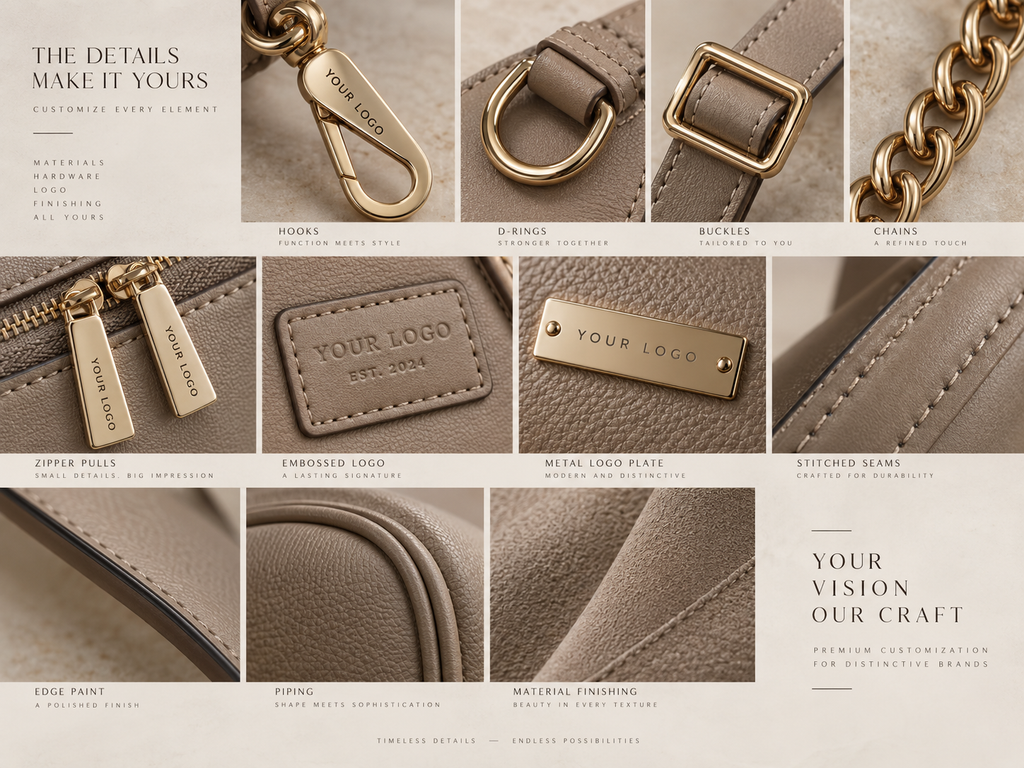
For fashion brands and private label buyers, branding is part of the manufacturing specification.
Provide your logo artwork if it is available, ideally in an editable vector format when required for the selected application.
Explain the desired logo location and size.
Possible branding details include:
- Embossed or debossed logos
- Metal logo plates
- Printed branding
- Interior labels
- Custom zipper pulls
- Branded hangtags
- Dust bags and retail packaging
Not all techniques will suit every material or design.
Ask the manufacturer to confirm which methods are available for the proposed product and whether any tooling or setup charges apply.
If your logo is not finalized, a note such as “front logo placement planned; artwork pending” is enough to make that requirement visible during initial discussions.
8. Provide Estimated Order Quantity and Color Breakdown
Manufacturers need your estimated quantity to assess materials, production planning, and pricing.
Avoid giving only a total quantity if you intend to divide the order among several styles or colors.
Example Order Breakdown
| Style | Color | Estimated Quantity |
|---|---|---|
| Style A – Shoulder Bag | Black | 150 pcs |
| Style A – Shoulder Bag | Brown | 100 pcs |
| Style B – Tote Bag | Black | 100 pcs |
| Total | 350 pcs |
(This is an illustrative order plan, not a minimum order requirement.)
The supplier can then clarify whether minimum quantities apply by style, color, material, or other manufacturing conditions.
You should also state whether the figures represent a trial order, a first production run, or an estimated repeat-order volume.
Do not assume that different styles can be combined automatically to meet a single MOQ.
Before finalizing your quantity breakdown, confirm how the manufacturer calculates its minimum order requirements. A total quantity that appears sufficient may still fall below the MOQ for individual styles, colors, or materials. Learn how these requirements work in our Private Label Bag MOQ Guide.
What if You Haven’t Decided on Quantity?
Share your best estimate and ask the manufacturer to explain the available quantity options.
For example:
“We are considering an initial order of approximately 100–300 pieces per style. Please advise the applicable MOQ and quantity-dependent pricing.”
9. Include Packaging and Delivery Requirements
Packaging should be specified before the final quotation because it may affect component purchasing, labor, carton configuration, and shipping requirements.
Describe whether you need standard protective packaging or custom branded packaging.
Potential requirements include dust bags, hangtags, care labels, individual protective bags, and custom boxes.
Delivery Information
Provide your destination country and, when possible, the city or delivery area.
State any preferred shipping method or Incoterm if you have one.
For example:
“Destination: Los Angeles, United States. Please state the quoted Incoterm and whether freight is included.”
A manufacturing quotation may exclude freight, insurance, import duties, taxes, or local delivery.
Ask the supplier to identify these exclusions clearly so you do not confuse a factory price with the total landed cost.
10. Specify Your Development Stage and Timeline
A factory can respond more effectively when it knows whether you are still researching, ready for sampling, or preparing to approve bulk production.
Explain your current stage:
Early concept: You have a product idea or reference images, but the detailed design is not finalized.
Development-ready: You have drawings, approximate specifications, and selected materials.
Sampling-ready: The main specifications are defined and you want a physical prototype.
Production-ready: You have an approved sample and confirmed requirements for a bulk order.
Also state your target sample approval date and required delivery date, if applicable.
Avoid assuming that a requested date is achievable until sampling, material availability, manufacturing time, and transportation have been reviewed.
From Quotation to Sample Approval
Preparing a detailed RFQ is only the beginning of the custom bag manufacturing process. Once the manufacturer has reviewed your requirements and developed a physical sample, the next step is to verify that the product matches the agreed design and specifications. This includes checking dimensions, materials, construction, handles, closures, hardware, interior details, and logo placement before authorizing bulk production. If you need to test the design before ordering, explore our Custom Bag Sampling service.
Use our Handbag Sample Approval Checklist to prepare for the sample review and document any changes that need to be completed before production.
11. Should You Share Your Target Manufacturing Budget?
Sharing a target price range can help a manufacturer identify suitable material and construction options.
For example:
“Our target manufacturing budget is around US$25–30 per bag at the planned quantity. Please advise whether the proposed specifications are feasible.”
This is an example of buyer-supplied budgeting information, not a Cassitybag price quotation.
A target budget is most useful when you also specify what it should include.
Does it cover the finished handbag only? Does it include branded packaging, freight, or development costs?
If you are uncertain about costs, request an itemized quotation rather than providing an arbitrary price target.
You can also compare cost implications before finalizing materials or construction.
12. Common RFQ Mistakes That Delay Handbag Quotations
Sending Only One Photograph
A single front-view image may not show the gusset, closure, bottom structure, or interior.
Provide additional views or explain which details are still undecided.
Not Specifying Materials
A generic description such as “good leather” is difficult to price consistently.
Describe the preferred appearance and any known technical requirements.
Giving Only the Total Order Quantity
If your order includes multiple colors or styles, provide a breakdown.
This helps the manufacturer determine whether supplier minimums apply to particular components.
Changing Specifications After Quotation
Changing the material, hardware, dimensions, or construction can change the price.
Treat early quotations as preliminary until the relevant specifications are confirmed.
Ignoring Development and Shipping Charges
Request separate explanations of sample fees, tooling, packaging, and freight to avoid unexpected expenses later.
Requesting a Final Price Before Design Approval
For a custom-developed bag, some construction and sourcing decisions may remain unresolved until sampling.
An initial estimate can help with feasibility, but the final production price should correspond to the approved design and quotation conditions.
Final Checklist: Before You Send Your Bag RFQ
Before sending your inquiry, confirm that you have identified the intended bag style, attached usable design references, specified approximate dimensions, described the preferred materials, and provided a realistic order quantity.
Then check whether you have included customization requirements, packaging expectations, development stage, delivery destination, and any important timing constraints.
If some details are still undecided, clearly label them as open questions.
A well-prepared RFQ does not need to answer every manufacturing question. It needs to give the factory enough information to identify what can be quoted and what still needs to be developed.
Ready to Request a Custom Bag Manufacturing Quote?
Cassitybag supports fashion brands and private label buyers developing custom handbags and other bag collections.
Whether you already have a complete tech pack or are starting with a design reference, you can share your project requirements for evaluation.
To begin, prepare your design files, preferred materials, approximate dimensions, and estimated quantity.
Explore Cassitybag’s Custom Leather Handbag Manufacturing Services and Request a Quote
Your next step is to turn your design information into a clear manufacturing conversation—before moving into sampling and production.