
A Practical Cost Guide for Fashion Brands and Private Label Buyers
How much does it cost to manufacture a custom handbag?
For fashion brands, startup labels, and sourcing managers, the answer depends on much more than the bag’s size or appearance. Material selection, construction complexity, hardware, order quantity, sampling requirements, and packaging all influence the final manufacturing cost.
A simple PU handbag and a structured genuine leather handbag may look similar in photographs but require very different materials, labor, and production processes.
This guide explains how custom handbag manufacturing costs are calculated, what affects your factory quotation, and how to plan a realistic budget before placing your first order.
How Much Does It Cost to Manufacture a Handbag?
As a broad industry planning reference, published 2026 supplier guides indicate that manufacturing prices can range from single-digit US dollars for relatively simple synthetic-material handbags to US$40 or more for genuine leather styles with complex construction.
The following ranges illustrate how material and design choices can influence factory pricing.
| Handbag Type | Indicative Manufacturing Cost per Unit |
|---|---|
| Basic PU handbag | US$6–12 |
| Mid-range PU or mixed-material handbag | US$10–18 |
| Genuine leather handbag | US$18–40+ |
| Complex, premium-material handbag | US$40–80+ |
These are third-party industry reference ranges, not Cassitybag quotations or guaranteed prices. Actual cost depends on the approved design, specifications, order quantity, manufacturing location, and quotation terms. Different suppliers may include different items in their prices.
A reliable manufacturing quotation should therefore be based on a specific design rather than a general handbag category.
For example, two genuine leather handbags may have very different costs if one uses a soft, minimally constructed body while the other requires reinforced panels, multiple compartments, specialized hardware, and extensive edge finishing.
If you are developing a new collection, explore Cassitybag’s custom leather handbag manufacturing services to understand the product development and customization options available for your project.
1. Material Selection: One of the Biggest Cost Factors
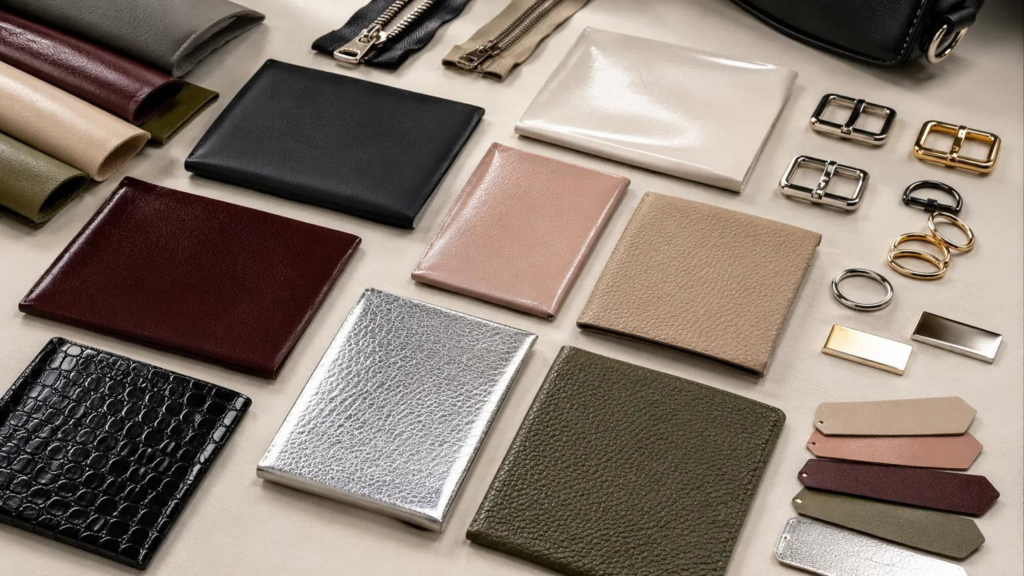
The main body material often represents a substantial part of handbag manufacturing cost.
Common options include genuine leather, PU leather, microfiber materials, and mixed-material constructions.
Genuine Leather
Genuine leather handbags generally require a higher material budget than basic PU alternatives.
However, leather cost is not determined by the term “genuine leather” alone. Important variables include:
- Leather grade and surface characteristics
- Thickness and flexibility
- Hide size and usable cutting yield
- Color and finishing requirements
- Quality consistency between production batches
Leather cutting efficiency is especially important.
Natural hides can contain irregular shapes, marks, or sections unsuitable for visible handbag panels. A design that requires large, uninterrupted leather panels may consume more material than one assembled from smaller components.
PU Leather and Alternative Materials
PU and microfiber-based materials can provide different cost and design options for brands developing private label collections.
Their actual prices depend on backing construction, surface treatment, thickness, performance specifications, and supplier requirements.
Material comparisons should therefore consider the intended product positioning, expected appearance, and verified technical requirements—not just the lowest price per meter.
Cost planning tip: Ask your manufacturer to quote the same handbag in two confirmed material options before changing the design itself. This provides a more useful cost comparison.
2. Handbag Size, Shape, and Construction Complexity
Material choice is only one part of handbag production cost.
The number of pattern pieces, construction methods, and finishing operations also influence the amount of work needed for each bag.
Soft Handbags vs. Structured Handbags
A soft handbag may achieve its silhouette through flexible materials and relatively light internal reinforcement.
A structured handbag may require additional components such as:
- Reinforced panels
- Base supports
- Interlining materials
- Shape-retaining internal layers
- More precise panel alignment
- Additional edge-finishing operations
These details can increase material consumption and assembly time.
However, structured handbags are not automatically more expensive in every case. A heavily detailed soft handbag can also require substantial labor.
Compartments, Pockets, and Closures
Every additional construction feature should be evaluated individually.
For example, an interior zipper pocket may require extra material, a zipper, cutting, stitching, and assembly operations.
Similarly, complex gussets, decorative seams, adjustable straps, and multi-part closures may increase production time.
Cost planning tip: Before removing functional features to reduce costs, identify which details define the handbag’s appearance and usability. Simplify less important construction elements first.
3. Hardware and Logo Customization Costs
Hardware affects both manufacturing cost and product appearance.
Common handbag hardware includes zippers, buckles, magnetic closures, D-rings, chains, strap adjusters, and metal logo plates.
Pricing can vary depending on:
- Hardware material and dimensions
- Stock components versus custom components
- Surface finish and plating specifications
- Number of components per handbag
- Supplier minimum quantities
- Mold or tooling requirements
Standard Hardware vs. Custom Hardware
Standard hardware can sometimes help reduce tooling requirements when suitable components are already available.
Custom hardware may require separate development, mold charges, or supplier minimums.
For emerging brands, selecting suitable stock hardware and introducing fully custom components in a later collection can be a practical budgeting strategy.
Logo Application
Branding methods may include embossing, debossing, printing, or metal logo elements, depending on the materials and the manufacturer’s confirmed capabilities.
Each method has different equipment, tooling, and production requirements.
When comparing quotations, confirm whether logo development charges are included in the unit price or charged separately.
4. How Order Quantity and MOQ Affect Handbag Cost
Minimum order quantity, or MOQ, is one of the most important pricing considerations in custom handbag manufacturing. The MOQ for Cassitybag is 100 pieces per style.
Minimum order quantities can also affect how a brand plans its first production run. In addition to unit pricing, buyers should understand whether minimums apply by style, color, material, or custom component. For a closer look at these requirements, read our guide to Private Label Bag MOQ Explained.
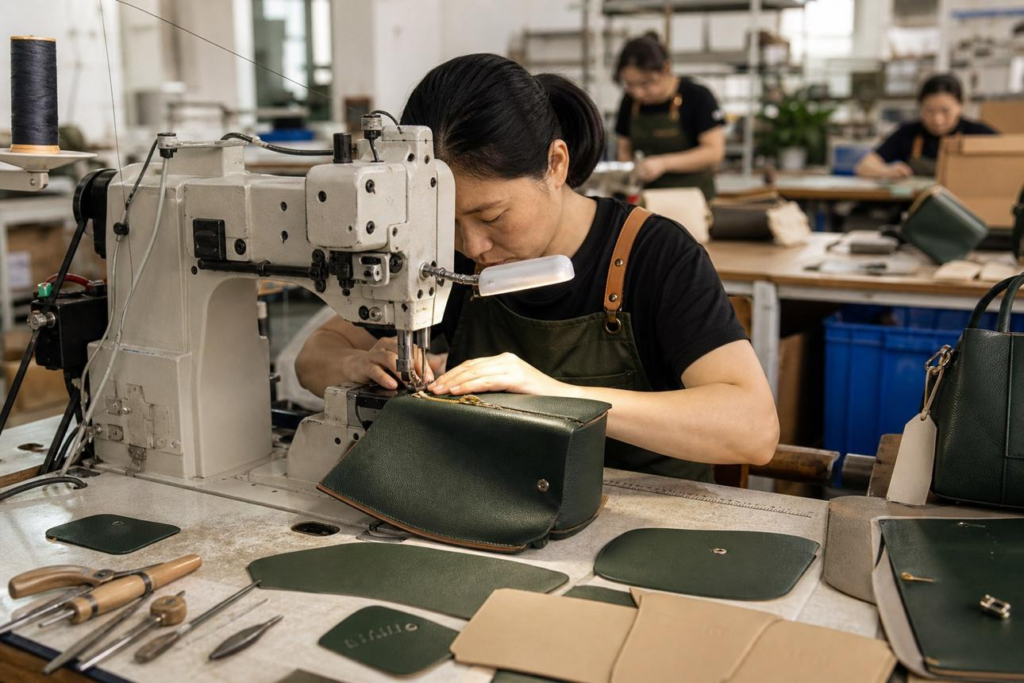
Manufacturers often need to prepare patterns, source materials, set up production processes, and coordinate component suppliers before producing the first finished unit.
Some of these costs are relatively fixed for a production batch.
As the order quantity increases, the fixed setup cost can be spread across more handbags. Material purchasing and production efficiency may also improve.
Illustrative Fixed-Cost Calculation
Consider a hypothetical project with a US$300 one-time setup expense.
| Order Quantity | Setup Cost Allocated per Bag |
|---|---|
| 100 handbags | US$3.00 |
| 300 handbags | US$1.00 |
| 500 handbags | US$0.60 |
| 1,000 handbags | US$0.30 |
This is a mathematical illustration only. US$300 is not an actual Cassitybag setup charge, and the figures exclude all variable manufacturing costs.
This example explains why identical designs can receive different unit quotations at different order quantities.
However, purchasing more units solely to obtain a lower unit price is not always the best decision.
A smaller initial order may reduce inventory exposure for a new brand, even when the manufacturing price per handbag is higher.
Is MOQ Per Style, Color, or Total Order?
This question should be clarified before requesting a production quotation.
A manufacturer may calculate minimum quantities by style, material, color, or another production requirement.
For example, ordering 300 handbags across three colors may have different pricing implications from ordering 300 handbags in one color.
Ask the manufacturer to confirm the relevant quantity rules in writing.
5. Sampling and Product Development Costs
Custom handbag development normally begins before bulk manufacturing.
A brand may provide a technical drawing, reference product, physical sample, or design brief. The manufacturer then evaluates the information and determines how to develop a production-ready sample.
Depending on the project, the development process may involve:
- Reviewing product requirements
- Developing or adapting patterns
- Sourcing appropriate materials and components
- Producing an initial sample
- Reviewing the sample and making approved revisions
- Confirming specifications before bulk production
Sampling can involve costs that are separate from the eventual bulk unit price.
These may include pattern development, materials, specialized components, tooling, and sample-making labor.
The manufacturing model you choose can also influence your initial development costs. OEM projects typically start with a buyer-provided design and may require new patterns, prototypes, and specialized components. ODM projects may begin with an existing manufacturer-developed design, potentially reducing some development work. However, actual costs depend on the design and customization requirements.
To understand which approach fits your project, read our guide to OEM vs ODM Bag Manufacturing: What’s the Difference?
Questions to Ask About Sample Charges
Before proceeding, clarify:
- What is included in the initial sample quotation?
- Are pattern-making charges separate?
- Are logo or hardware molds charged individually?
- How are design revisions priced?
- Is any sampling charge credited against a future order?
- What specifications must be approved before production?
Not every manufacturer handles sample charges in the same way.
A clearly approved sample helps establish the reference for subsequent production and reduces uncertainty about what the factory is expected to manufacture.
Why Sample Approval Matters Before Bulk Production
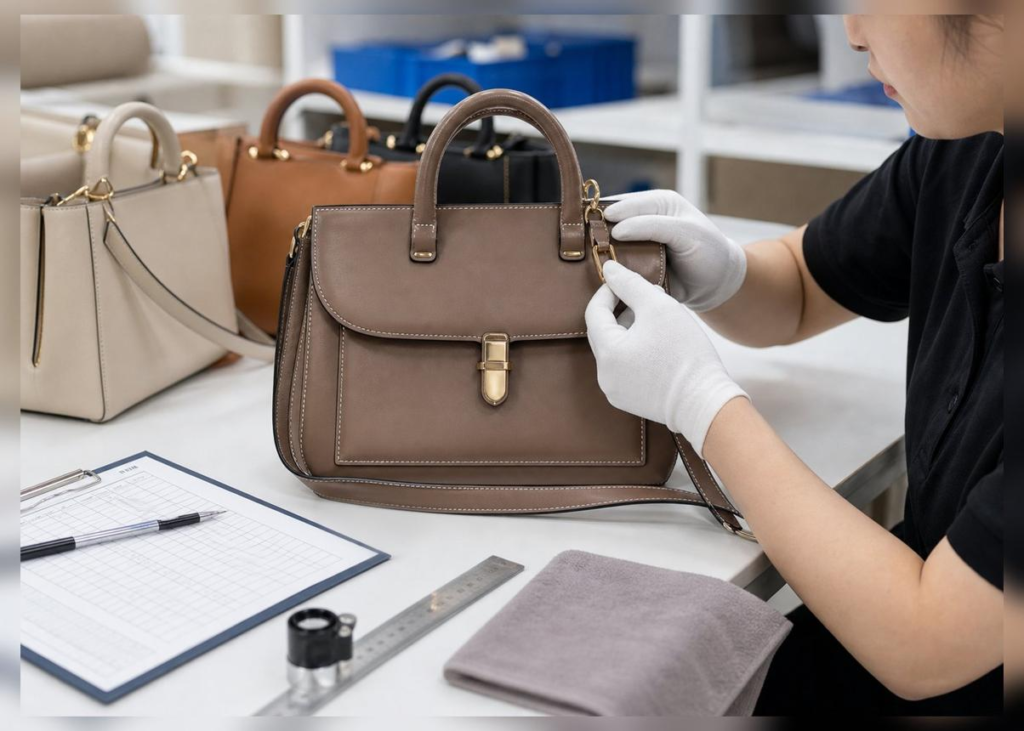
Sampling is not only a development expense—it is also an opportunity to identify design and construction issues before committing to a larger production order. Reviewing the sample against confirmed specifications can help reduce the risk of costly revisions, material changes, or production discrepancies later. Before approving bulk manufacturing, check the bag’s dimensions, materials, stitching, hardware, closures, and branding details.
For a step-by-step review process, use our Handbag Sample Approval Checklist to understand what should be inspected and documented before production begins.
6. Packaging, Quality Control, and Shipping
The quoted manufacturing price may not represent the full amount a brand will spend to receive its inventory.
Additional expenses can arise from packaging, testing, inspection, transportation, customs procedures, and local delivery.
Custom Packaging
Packaging choices may include protective bags, branded dust bags, hangtags, care cards, cartons, or presentation boxes.
Each option has a cost and may have its own supplier minimum order requirement.
Brands should specify packaging requirements before comparing quotations rather than adding them only after the main product price has been agreed.
Quality Control
Quality requirements should form part of the approved production specification.
Relevant handbag inspection points may include:
- Materials and color consistency
- Stitching and seam alignment
- Handle and strap attachment
- Zipper and closure operation
- Hardware placement
- Edge finishing
- Shape and dimensions
- Interior construction and finishing
Additional third-party inspection or laboratory testing may create separate project expenses.
Never assume that a quoted manufacturing price includes independent testing unless the supplier confirms it.
Freight and Import Costs
A factory price and a landed cost are not the same thing.
For international orders, the landed cost can include freight, insurance, import duties, taxes where applicable, and destination handling or delivery.
The allocation of these charges depends partly on the agreed shipping terms.
Before comparing suppliers, make sure you understand the quotation’s Incoterm and exactly what is included.
7. Example: Calculating a Handbag’s Landed Cost
Suppose a brand receives a hypothetical manufacturing quotation for 300 handbags.
The following figures are for budgeting education only, not a current supplier offer.
| Cost Item | Example Amount |
|---|---|
| Handbag unit price | US$25.00 |
| Packaging per bag | US$1.00 |
| Allocated development costs | US$2.00 |
| Allocated freight and import expenses | US$4.00 |
| Illustrative landed cost per bag | US$32.00 |
The project total would be:
300 handbags × US$32.00 = US$9,600
This example excludes any additional business costs not specified above, such as marketing, marketplace fees, warehousing, returns, or applicable taxes outside the assumed import expense.
It also assumes the unit price excludes packaging, development, and transport, so those items are not counted twice.
A brand should request itemized quotations and use actual freight and import estimates before treating such a calculation as a purchasing budget.
8. How to Reduce Custom Handbag Manufacturing Costs Without Losing Your Design Identity
Cost reduction is most effective when it happens during product development rather than after the final sample has been approved.
Simplify Non-Essential Construction
Review extra pockets, decorative panels, complicated closures, and construction details that do not meaningfully support the product concept.
Removing unnecessary operations may reduce both material consumption and assembly work.
Compare Appropriate Materials
Ask for material alternatives that meet the intended appearance, structure, and confirmed product requirements.
Do not automatically substitute a cheaper material without considering its effect on the finished sample.
Prioritize Standard Components
Where appropriate, use available hardware dimensions and finishes rather than developing multiple custom molds for the first production run.
Plan Colors and Quantities Carefully
Too many colors at a low total order quantity can complicate material purchasing and production planning.
A focused initial assortment may be easier to quote and manage.
Confirm Specifications Before Bulk Production
Late design changes can create new sampling, sourcing, or production expenses.
Finalize the main materials, dimensions, construction details, branding, and packaging before approving the production specification.
The objective is not simply to manufacture the cheapest possible handbag. It is to produce a commercially viable design with a cost structure that fits your brand.
9. What Information Do You Need for an Accurate Handbag Manufacturing Quote?
The more complete your project information is, the more useful a manufacturing quotation will be.
Prepare the following before contacting a custom handbag manufacturer:
| Required Information | What to Provide |
|---|---|
| Bag style | Tote, shoulder bag, crossbody, satchel, or another style |
| Design reference | Sketches, technical drawings, photographs, or physical sample |
| Material | Preferred leather or alternative material |
| Dimensions | Width, height, depth, strap measurements |
| Construction | Structure, pockets, lining, closures |
| Branding | Logo placement and preferred application |
| Hardware | Type, finish, dimensions, or reference |
| Quantity | Estimated total quantity and breakdown by color |
| Packaging | Standard or custom packaging requirements |
| Destination | Delivery country and preferred shipping terms |
If you do not have a complete tech pack yet, identify which specifications are confirmed and which still require development.
Avoid presenting approximate dimensions or unverified materials as final production requirements. Learn What Information Do You Need for an Accurate Quote?
For buyers exploring different handbag silhouettes, Cassitybag’s custom leather handbag manufacturer page provides a starting point for discussing design development and production.
10. Frequently Asked Questions About Handbag Manufacturing Costs
Final Thoughts: Plan Your Handbag Cost Before You Manufacture
Custom handbag manufacturing costs are determined by a combination of design, materials, construction, hardware, order quantity, and production requirements.
A useful quotation should make these variables clear rather than presenting a single price without sufficient specification details.
For fashion brands and private label buyers, the most productive approach is to define the handbag’s essential features, establish a target manufacturing budget, and work with a manufacturing partner to evaluate feasible options.
Request a Custom Handbag Manufacturing Quote
Planning your next handbag collection?
Cassitybag works with brands developing custom and private label bags. Share your handbag design, preferred materials, estimated quantity, and customization requirements so the project can be evaluated.
Explore Custom Handbag Manufacturing & Request a Quote
You can also visit Cassitybag to explore additional custom bag categories and manufacturing services.